From Moen jo Daro to Mazar e Quaid

This thread is about historical places of Sindh. The region has many historical places as its been invaded by Greeks, Persian, Arabs, Mongols, etc. All left some marks on land.

Lets explore and see how much we know about the history and historical places of the area we live in.

Re: From Moen jo Daro to Mazar e Quaid

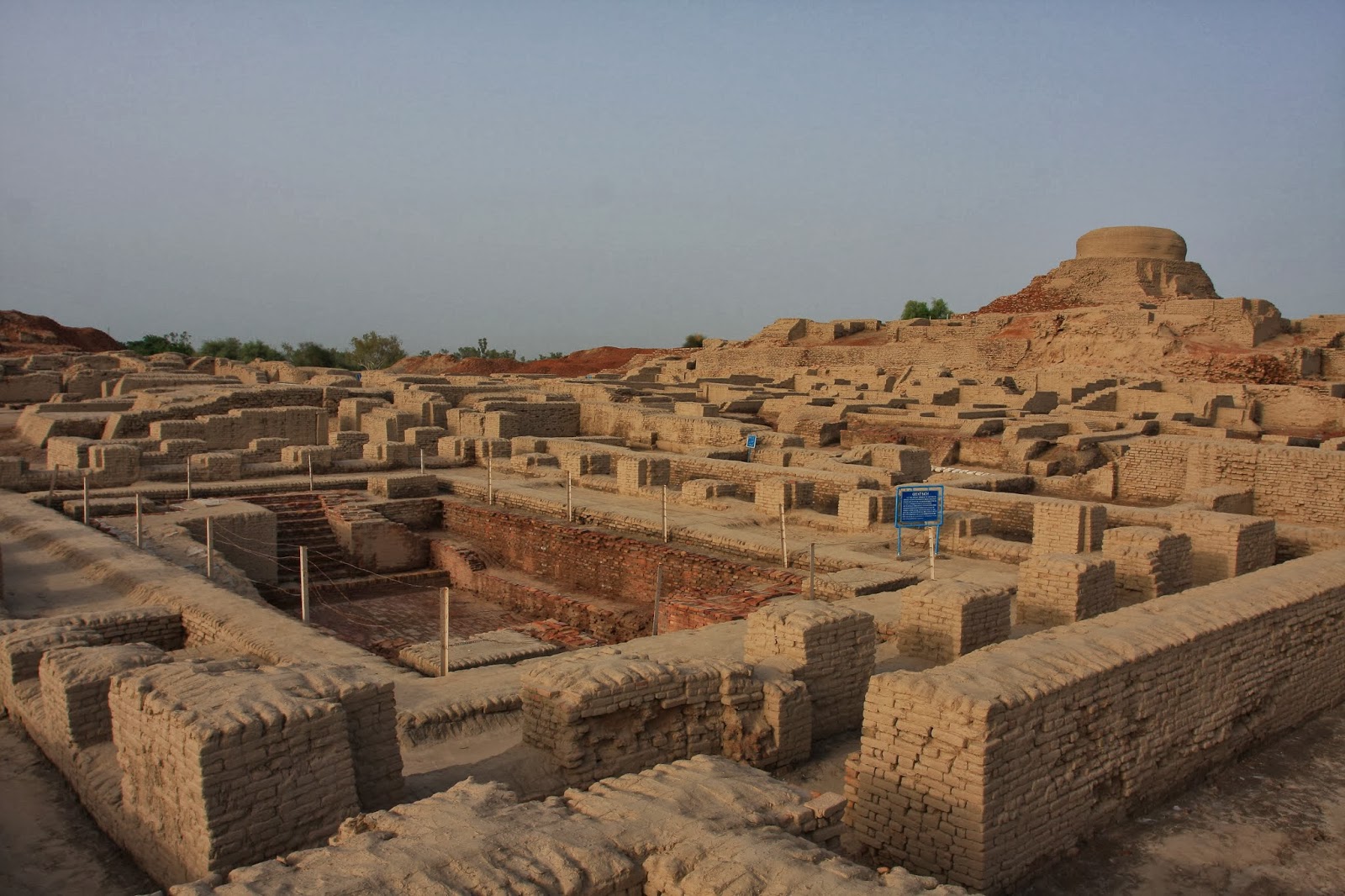
No one knows about the religion followed in Indus Valley Civilization at its peek. Moen jo Daro is normally recognised with the following picture.

But this place in picture is not as old, as the Indus Civilisation is.

This is Buddhist Stupa.

The Buddhist Stupa and monasteries of Kushana period dating back to 2nd century AD were constructed about 16 centuries after the downfall of the Indus civilisation. The approach to the drum of the stupa lies in the middle of its eastern side. Treasure hunters dug in the hollow drum of the stupa in search of the treasure and removed the relic casket long before the scientific excavations were taken up in 1922. On all for sides of the courtyard of the stupa are monastic cells and on the east there are 2 common large rooms. A large number of coins of King Vasudeva belonging to Kushana period, were found from the monastery.


Restored attachments:

Re: From Moen jo Daro to Mazar e Quaid

Dancing girl of Moen jo Daro may not be a dancing girl.

http://0.tqn.com/d/archaeology/1/G/V/8/dancinggirl2.jpg

the ‘dancing girl,’ a 10.8 centimeter high bronze statuette, sculpted using the lost wax method around 2500 BC, and excavated in 1926 from a house in the ancient city of Mohenjo-Daro, Pakistan.

She was British archaeologist Mortimer Wheeler’s favorite statuette, as you can tell in this quote from a 1973 television program:

There is her little Baluchi-style face with pouting lips and insolent look in the eye. She’s about fifteen years old I should think, not more, but she stands there with bangles all the way up her arm and nothing else on. A girl perfectly, for the moment, perfectly confident of herself and the world. There’s nothing like her, I think, in the world.

John Marshall, one of the excavators at Mohenjo-Daro, described her as a vivid impression of the young … girl, her hand on her hip in a half-impudent posture, and legs slightly forward as she beats time to the music with her legs and feet…

The artistry of this lovely statuette crosses time and space and speaks to us of a seemingly unknowable, but at least fleetingly recognizable past. As author Gregory Possehl says, We may not be certain that she was a dancer, but she was good at what she did and she knew it.

The Dancing Girl of Mohenjo-Daro

Re: From Moen jo Daro to Mazar e Quaid

**At the Victoria and Albert Museum’s Victoria Memorial Hall in Kolkata, India, the Dancing Girl stands quietly far away from home. Famous the world over, people love to have her in their drawing rooms, but the most recognised symbol of a once-mighty civilisation apparently has no admirers back home. Perhaps this is the reason why the government has made no efforts to bring back the original bronze figurine of the Indus Valley Civilisation’s Dancing Girl taken away from its homeland in the 1930s.

With King Priest

**

Although former prime minister Zulfikar Ali Bhutto had succeeded in getting the King Priest statue back from India under the Simla Agreement in 1972, no government since then has taken any interest in this regard. Archaeologists contend that under the Unesco Convention of 1972, the original owner of any artefact is the country where the relic was found.

Re: From Moen jo Daro to Mazar e Quaid

I do not think there was any religion of the Indus Valley. Some people say that their way of life was the precursor of other religions that were later formed in the region (Hinduism and Buddhism).

Re: From Moen jo Daro to Mazar e Quaid

Salman Rashid: Besting the Nile

Sargon, king of Akkad or Mesopotamia, who ruled during the 24th century BCE, is known to have boasted about the greatness of his country’s markets and the splendid trading vessels anchoring in his ports. Among other lands, he proudly mentioned Meluhha, suggesting the social, cultural and economic importance of what we now have reason to believe was Sindh. The ships that called at Sargon’s ports came from the rich and flourishing city ironically known today as Moen jo Daro or Mound of the Dead.

http://2.bp.blogspot.com/-sM3RKBCjDFg/UsZeg93iokI/AAAAAAAAI5c/dQe1llkYUBo/s400/salman+rashid.jpg

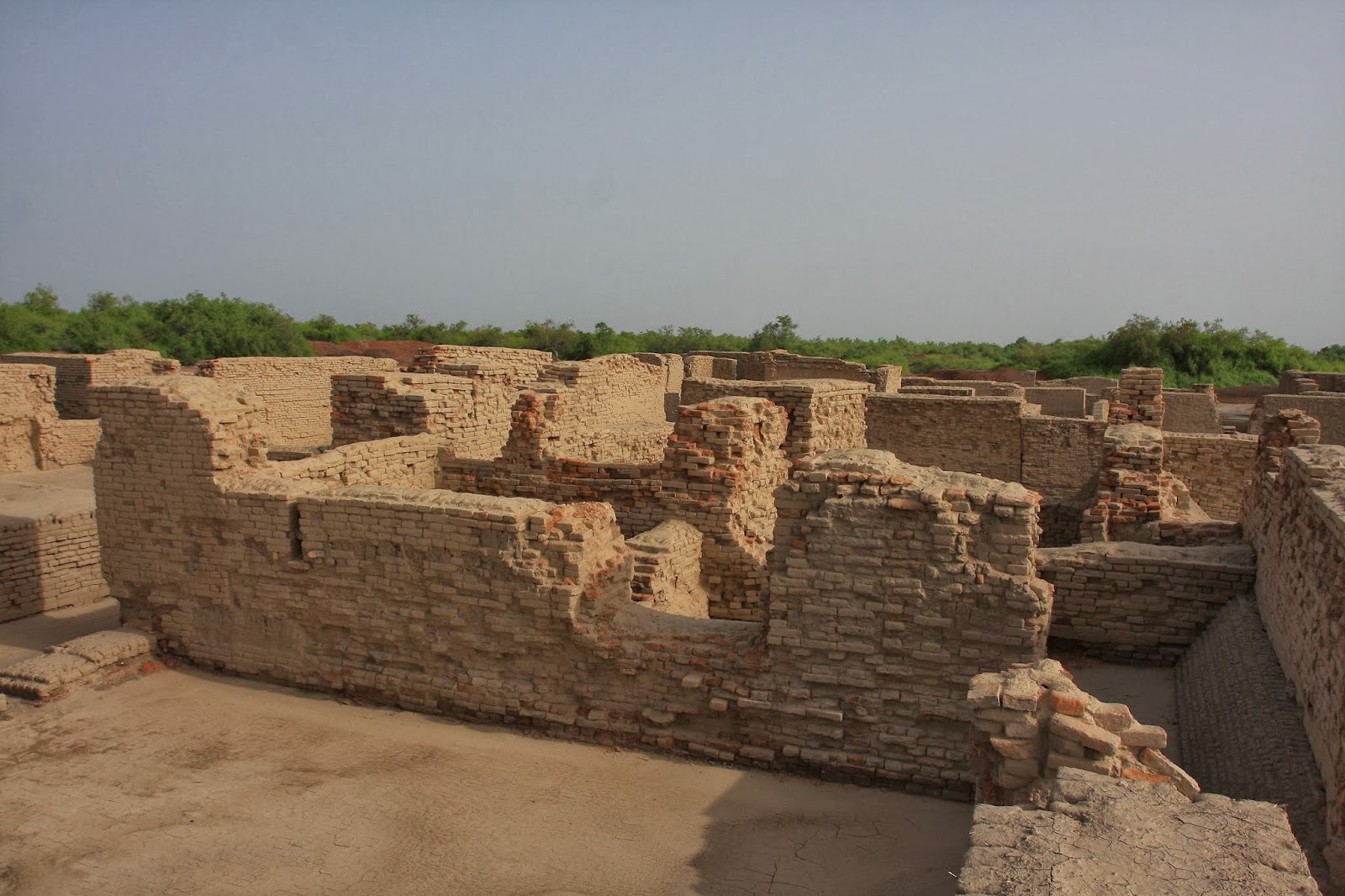
In 1921, the Archaeological Survey of India arrived to investigate the dusty mound for Buddhist remains. They uncovered the Buddhist stupa, all right. But as they probed deeper, they hit upon an urban centre, well-developed and orderly and more ancient than anything Indian archaeologists could expect. Little did they know that investigations during the next two decades would push back the provenance of Moen jo Daro to the 3rd millennium BCE.

http://4.bp.blogspot.com/-DT_tyxSk_Wk/UsZew_Wb7VI/AAAAAAAAI5k/CKp95GcM-p4/s400/salman+rashid+travel+Pakistan.jpg

Laid out in a neat grid aligned with the waxing and waning of celestial bodies, the city had distinctly separate walled and gated precincts besides a dominant citadel area. Unlike Mesopotamian cities, there were no opulent mansions or exclusive temples for the elite. This was clearly a homogenous society with large residences belonging to the rich abutting the humbler homes and workshops of the working class.

Personal hygiene and cleanliness were of paramount importance for the people of this remarkable city. Most houses had in-built wells. Alternately, groups of four or five houses shared a common well. Every house had a bathroom with a bathing platform from where the water drained through a chute into covered sewers lining the streets. Rectangular sump pits interspersed at regular intervals along the sewage drains collected solid waste. Rubbish bins lined all major streets, which together with the pits, required regular clearing, suggesting an efficient municipal system at work.

The discovery of the Great Bath in Moen jo Daro implies that religious rituals centred on the use of water. Billed as the “earliest public water tank in the ancient world”, this structure, with bricks laid on edge in gypsum plaster and sealed by a thick layer of bitumen to prevent seepage, is a marvel of ancient engineering.

In awe of the previously discovered grandeur of Mesopotamia, early archaeologists believed the Indus civilisation was derived from the former. But investigations carried out by American teams in the last quarter of the 20th century indicate that it was significantly independent. They also show that various technological innovations were deployed in Moen jo Daro and Harappa some 500 years before being exported to Mesopotamia. Notable among these was bead making from precious and semi-precious stones. Today, we even know that the Indus civilisation maintained colonies of craftsmen in Mesopotamia. The artefacts discovered in western Iran, the Persian Gulf and Mesopotamia now have provenance: they are all reminders of the earliest Indus Valley travellers.

The most intriguing facet of this culture is, doubtlessly, the variety of its stone and steatite seals. Square in shape, they are imprinted with images of rhinoceros, crocodile, bull and unicorn. In most cases, the animal’s image is topped by a line of symbols – clearly a hieroglyphic script that still remains undeciphered as it is different from any known system of ancient writing.

The discovery of 13 skeletons among the ruins in what was believed to be postures of “agony and violence” led early investigators to attribute the destruction of this fabulous city to the Aryan influx in about 1800 BCE. It is now recognized, though, that these deaths, occurring inside a house, were the result of a roof collapse.

On the contrary, rather than destroying, the newcomers adapted and assimilated with the host culture. The Vedic god Shiva, for instance, is clearly modelled after the deity depicted on the seals, just as Parvati derives from the Mother Goddess figurine recovered from the Indus cities. Moreover, since the Central Asiatic newcomers were not acquainted with the monkey and elephant until they reached the Indus valley, it is likely that the Hindu gods Hanuman and Ganesh were also based on existing local deities. Curiously enough, more than 2000 years after the demise of the Indus cities, Celtic tribes of the British Isles depicted their god Cernunnos in exactly the same posture as the ancient Shiva prototype from the Indus valley, seated cross-legged in yogic posture surrounded by wild animals.

Today, the Vedic war god Indra stands exonerated from culpability of destruction as we know that the mighty Indus itself, the river that spawned this great civilization, proved its real nemesis. By about 1700 BCE, intermittent flooding resulted in wealthy citizens abandoning Moen jo Daro. A marked decline in the construction of this late period implies that the city was taken over by the less affluent. By and by, they too moved on and the dust of the ages smothered the city.

http://4.bp.blogspot.com/-avX4Hf-iOD0/UsZe5u-UXYI/AAAAAAAAI5s/ylwssqoUAUo/s400/salman+rashid+travel+writer.jpg

About two millennia later, a group of pious Buddhists crowned the highest part of the forgotten city with a stupa and monastery. Over time, this also passed into oblivion, only to be dug up in 1921 so that the story could reach back to 2600 BCE, when the city was flourishing. But even that is not yet full circle as archaeologists tell us that below the uppermost and last phase in the life of the city, there sit several earlier stages of occupation. One day, when they are capable of probing the water table, we will finally be able to tell what this wonderful city was in the 6th millennium BCE and earlier.

Re: From Moen jo Daro to Mazar e Quaid

so Moen jo Daro was a god-less society and its a symbol of flourishing civilization todate. any link of religion and deterioration of civilization? what was the religion of people lived in Mehr-Garh?

Re: From Moen jo Daro to Mazar e Quaid

i am sure they’d be similar to indus valley one…since we do not know when qayamat will come, have you ever thought what if some other people discover our society 5000 years down the track :hehe:

Re: From Moen jo Daro to Mazar e Quaid

they would know about us, if youtube is not banned in their era :hehe:

Re: From Moen jo Daro to Mazar e Quaid

Kahoo Jo Daro, near Mirpur Khas…

mirpurkhas 5 hazar sal purana kaho jo daro.mpg - YouTube
Kaho Jo Daro situated near Mirpurkhas town is included in the list of 128 sites. Because of the negligence, it has been damaged. People of area had dug out and removed earth from there. An officer of Culture Department was deputed to visit the site. He has reported that ruins of the site have lost their original shape, as people have removed earth from there and some persons have encroached upon the land by constructing katcha houses.

Welcome to the Website of Provincial Assembly of Sindh

Re: From Moen jo Daro to Mazar e Quaid

sad, if proper research is done indus valley civilization could well prove to be the oldest civilization of the world

Re: From Moen jo Daro to Mazar e Quaid

The question is if British didn't conquer the area, would we be able to discover what has been discovered todate?

Re: From Moen jo Daro to Mazar e Quaid

no we have only destroyed them. the westerners look after their historical sites even if they are a 100 years old.

Re: From Moen jo Daro to Mazar e Quaid

if the current cities that we have these days convert into ruins, the coming excavators might consider them to be older as compared to Indus valley :p

Re: From Moen jo Daro to Mazar e Quaid

They would say’ we can’t read Moen jo Daro’s language, but they were definitely not illiterate (jahil). The inhabitants of newly found ruins were jahil, as they destroyed their cities themselves. No planing, no civic sense.. besharam log’ :bummer:

Re: From Moen jo Daro to Mazar e Quaid

when i was a kid i didnt use to believe in these ruins and how old they are. but now when i think of 2005 earthquake and how many cities have virtually vanished from the earth's surface. new citities will be built on top of them and so on. its mentioned in the Quran as well.

Re: From Moen jo Daro to Mazar e Quaid

Quran mentions that all development and availability of resources finally lead to an attitude that destroyed those nations and their cities. Is that also happened with Moen jo Daro and other sites?

Re: From Moen jo Daro to Mazar e Quaid

could well be, some azaab of any sort...or natural disaster likefloods or earthquakes...

Re: From Moen jo Daro to Mazar e Quaid

Sindh seeks return of Moenjodaro?s Dancing Girl from India - DAWN.COM

KARACHI: As Bilawal Bhutto-Zardari’s Sindh Festival has turned people’s attention towards the culture and civilisation of Sindh, the provincial government is sending a request to Islamabad for asking India to return the famous statue of the Dancing Girl, which is in possession of the Indian authorities since 1946.
“We are writing to the federal government to help us repatriate our exiled heroine back to us from India,” a member of the Sindh cabinet told Dawn.
The two most famous artefacts belonging to Moenjodaro, regarded as one of the world’s most ancient planned cities, are the King Priest and the Dancing Girl.
Officials said the two relics had been transported by British archaeologist Sir Mortimer Wheeler to Delhi in 1946 to be put in an exhibition and had remained there since then.
In 1947 after the partition of the subcontinent, the Pakistani authorities asked New Delhi to return the two relics along with several others including the Fasting Buddha.
A Pakistani official had visited Delhi and succeeded in getting hold of the King Priest and the Fasting Buddha. But the Indians refused to hand over the 10.8cm dark bronze statuette of the Dancing Girl. It has inspired many explorers to write over the decades dossiers on the history it was a witness to and reflections it offered about the role of women in the society millennia ago when it was not under patriarchal dominance.
There is a popular legend which said the Indian authorities had refused to hand over both the Moenjodaro relics and offered the Pakistani authorities to choose from the King Priest and the Dancing Girl.
“The Pakistanis chose the King Priest made up of soapstone. Perhaps they were hesitant to get hold of a naked teenager to avoid a possible backlash from religious quarters,” an official observed.
The King Priest — a bearded man wearing an Ajrak-like cloth with hair neatly combed back — is widely speculated to be the ruler of the city.
Experts said they had repeatedly requested previous governments to try to take possession of the Dancing Girl, but no one took any interest.
“It is good to see the government is seriously pursuing this matter,” said a provincial government official who previously worked in the archaeology division.
Archaeologists said under the UNESCO Convention of 1972, the original owner of any artefact is the country where the relic was found.
Qasim Ali Qasim, director of the provincial archaeology department, said since the federal government was a signatory to the UNESCO convention, the Sindh government would have to ask Islamabad, which could send a request to the world cultural organisation to get the things rolling.
He said Islamabad’s efforts in 2009 brought back 13 artefacts belonging to the Gandhara civilization from several countries and same could be done for the figurine wearing bangles all the way up in one of her arms, which is still a common sight in Thar Desert.
“The Dancing Girl belongs to us and everyone knows it.”

Re: From Moen jo Daro to Mazar e Quaid

That civilization did not get destroyed. It only transformed with the passage of time.
These cities we see today are only a few of many. They may also have been abandoned by their inhabitants instead of being destroyed.