Re: Friends of Pakistan-A title not wanted!
US special envoy Richard Holbrooke believes Pakistan needs close to $50 billion to stabilize itself
More importantly how can development work be undertaken in areas conrolled by brutal Taliban dacoits and murderers?
Friends in dire need](http://www.dawn.com/wps/wcm/connect/dawn-content-library/dawn/news/pakistan/friends-in-need--za)
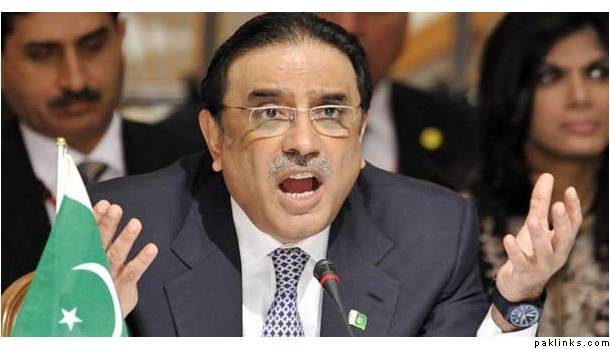
A HUGE challenge lies ahead. It is clear that the international community acknowledges the importance of a socially and economically stable Pakistan, a goal that differs markedly from the current reality.
The pledges made at the Friends of Pakistan meeting in Tokyo show that the world is cognisant of the dangers facing Pakistan, and realises that our problems are not ours alone. The domino effect of Pakistan falling to the militants was summed up by President Zardari when he said that ‘If we lose, you lose. If we lose, the world loses.’ He is spot on in his assessment, even if it carries with it a touch of Gen Musharraf’s ‘you can’t do without me’ strategy of dealing with the West. Also, should his words be construed as an inadvertent admission that Pakistan is indeed the global hub of terrorism and militancy? Why else would the nation’s welfare be so important to far-flung countries?
Pakistan has been in tight spots before but our predicament today is perhaps unmatched. We are dealing not with an external enemy or separatists but an army of home-grown barbarians that wants to impose a system of ‘governance’ wholly at odds with our core values. We need all the help we can get. But here’s the real challenge: we have to keep our side of the bargain. So far, successive governments have capitulated to the Taliban who need to be taken head-on, not appeased. A drastic rethink is in order. Otherwise the state will end up ceding territory one district after the other and no amount of foreign aid will help reverse the tide.
The money pledged at Tokyo — $5.28bn at last count — covers a range of issues, from energy needs and economic support to healthcare, education and poverty alleviation. In the short term, this show of support could bolster investor confidence and give local markets a much-needed jab in the arm. It is also hoped that creating job opportunities and building more schools and hospitals in the tribal belt will change mindsets and thereby deprive the Taliban of fresh recruits. True, uneducated and unemployed young men with no prospects are lured by the militants’ promises of a monthly wage, immediate empowerment, eternal salvation and, equally importantly, a sense of identity. But here’s the rub. How can infrastructure be developed in areas controlled by the Taliban? How can new schools be built when the few educational institutions that still exist are blown up by militants? Who will invest in a factory in Waziristan knowing that his managers could be kidnapped for ransom and his stocks destroyed or stolen? No progress is possible while the Taliban call the shots. The sooner the government understands this, the better off the country will be as a whole.
$5.28 billion not enough to stabilise Pakistan](http://www.dawn.com/wps/wcm/connect/dawn-content-library/dawn/news/pakistan/five-billion-not-enough-for-pakistan-holbrooke-ss)
TOKYO: Pakistan needs further international support, US special envoy Richard Holbrooke said on Saturday as he warned that a pledge of five billion dollars was ‘not enough’ to stabilise the troubled nation.
At an aid meeting in Tokyo on Friday, donor countries pledged a total of 5.28 billion dollars to stabilise Pakistan, seen as a frontline state against Islamic extremism.
The United States and Japan pledged one billion dollars each at the meeting Tokyo co-hosted with the World Bank.
‘Five billion dollars is not enough,’ said Holbrooke, US special envoy for Afghanistan and Pakistan.
‘The terrorists in western Pakistan are planning other attacks around the world … so we need to work hard to strengthen the government of Pakistan, to deal with the tribal areas with all its problems,’ he said.
‘We should – after congratulating the result yesterday – we should be very mindful of the fact that the problem is far from over,’ he said.
He declined to give a figure on how much money was required to stabilise Pakistan, but noted that some economists say the number ‘is as high as 50 billion dollars.’
More than half of Pakistan’s people live below the poverty line of two dollars a day and **‘even in great cities like Karachi – which I would point out is the world’s largest Muslim city – 17 million people (live) with only a few hours of electricity a day,’ **he added.
‘I can’t set a specific goal for 2012,’ when Obama’s term ends, said Holbrooke.
‘But I will say this: the situation in Afghanistan cannot be the same in 2012.’
‘The measurement of success in Afghanistan is returning the security responsibility to the local security authorities,’ he said.
‘Pakistan is even more difficult. There is a clear red line laid out publicly by the government. No foreign boots of the troops on that ground in Pakistan.
‘So it’s up to Pakistan to defend itself with the international assistance for economic and military,’ he said.
He said the people fighting alongside the Taliban were divided into three groups, led by a small group of ‘hard-core
Taliban who has extreme views on things like women’s rights, sharia law.’
The second group were those who joined the militants ‘because they have grievances against the government’ over corruption or military operations that killed family members, while the third group was a large number of people who fought for the Taliban because they paid more than the Afghan army.
‘When you talk about reconciliation, it’s reaching out to those last two groups,’ Holbrooke said.