HONOURED HEROES OF THE WAR 1965
Major Aziz Bhatti
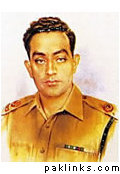
Born 1928 in Hong Kong. Commissioned into the Punjab Regiment, 1950. On 6 September 1965, as Company Commander in the Burki area of the Lahore sector, Major Bhatti chose to move with his forward platton under incessant artillery and tank attacks for five days and nights in the defence of the strategic BRB canal. Throughout, undaunted by constant fire from enemy shell arms, tanks and artillery, he organized the defence of the canal, directing his men to answer the fire until he was hit by an enemy tank shell which killed him on 10 September 1965. He was 37 years old.
**Sq. Ldr. Mohammad Mahmood Alam
**
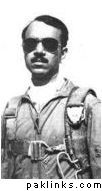
On 6th September, 1965, during an aerial combat over enemy territory, Squadron Leader Mohammad Mahmood Alam flying as pilot of an F-86 Sabre Jet, shoot down two enemy Hunter aircraft and damaged three others. For the exceptional flying skill and valor displayed by Squadron Leader Mohammad Mahmood Alam in operations, he was awarded Sitara-i-Juraat. On 7th September, 1965, in a number of interception missions flown by Squadron Leader Mohammad Mahmood Alam against the enemy aircraft attacking Pakistan Air Force Station, Sargodha, Squadron Leader Alam destroyed five more enemy Hunter aircrafts. In less than a minute , which remains a record till today. Overall he had nine kills and two damagers to his credit. For the exceptional flying skill and valour shown by him in pressing home his attacks in aerial combats with the enemy, Squadron Leader Mohammad Mahmood Alam is awarded a bar to his Sitara-i-Juraat.
Sq. Ldr Alauddin Ahmed
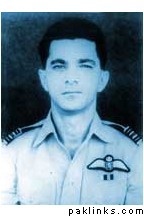
Squadron Leader Alauddin Ahmed, led his squadron in twenty combat missions against the Indian ground and air forces. His leadership throughout the operations was cool, courageous and most determined which inspired the greatest confidence amongst pilots of his formations and resulted in destruction of many Indian tanks and vehicles. In his last sortie, he attacked and blew up an important ammunition train at Gurdaspur rail-head in complete disregard to his personal safety. During this attack on September 13, his aircraft was damaged and was reported missing over enemy territory. Subsequently, it was confirmed that the officer died in this action. For his exemplary leadership, courage and valour, Squadron Leader Alauddin Ahmed was awarded Sitara-i-Juraat.
Squadron Leader Muhammad Iqbal
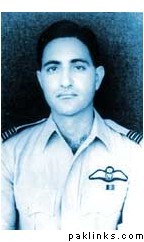
Squadron Leader Muhammad Iqbal flew many operational missions which played a vital part in the success of the Pakistan Air Force during the India-Pakistan war. He carried out these missions with determination, enthusiasm, outstanding ability and at great personal risk. His performance, throughout, was exemplary and highly inspiring for the personnel under his command. For his outstanding leadership, valour, loyalty and invaluable services to the Pakistan Air Force and the country, he was awarded Sitara-i-Juraat.
Squadron Leader Munir Ahmed
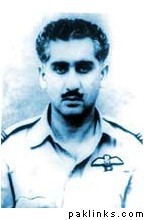
During the war a high-powered heavily defended radar station near Amritsar was attacked repeatedly by PAF fighters. In all these missions, Squadron Leader Munir unhesitantly volunteered to fly without regard for his personal safety, exposed himself to intense ack ack fire for long periods in attempts to locate and destroy the target. In the final successful attack on September 11, he made the supreme sacrifice when his aircraft was hit. Before his last sortie, Munir flew eight combat missions and shot down an IAF Gnat on September 10. For displaying courage and determination in the face of heavy odds and beyond the call of duty, Squadron Leader Munir-ud-Din Ahmed was awarded Sitara-i-Juraat.
Squadron Leader Sarfaraz Ahmed Rafiqui
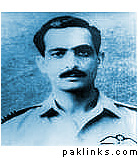
On 6th September, 1965, Squadron Leader Sarfaraz Ahmed Rafiqui led a formation of three F-86 aircraft on a strike against Halwara airfield. Soon after crossing the Indian border Squadron Leader Rafiqui had been warned about a large number of enemy interceptors being in the air by the leader of a returning F-86 formation. He, however, continued his mission single-mindedly. On the way back, the formation was intercepted by about ten Hunter aircraft out of which Squadron Leader Rafiqui accounted for one in the first few seconds. After Squadron Leader Rafiqui shot down one Hunter aircraft, his guns jammed due to a defect and stopped firing upon which he refused to leave the battle area as he would have been perfectly justified to do; he, instead ordered his No. 2 to take over as leader and continue the engagement with the enemy. He himself now took up a defensive position in the formation in an attempt to give it as much protection as was possible by continuing fighting maneuvers in unarmed aircraft whilst the remainder proceeded to give battle to the enemy. This called for a quality of courage and dedication on the part of Squadron Leader Rafiqui equal to the best in the history of air-fighting. The end for him was never in doubt. He chose to disregard it and in the process, his aircraft was shot down and he was killed but not without his action enabling his formation to shoot down three more Hunter aircraft. Squadron Leader Rafiqui thus provided exemplary leadership in battle and displayed outstanding courage in the face of exceptionally strong opposition. His inspiring leadership and selfless example significantly affected the subsequent course of the air war in which the P.A.F. never failed to dictate terms to an overwhelmingly larger and better equipped enemy. Squadron Leader Rafiqui’s conduct was clearly beyond the call of duty and conformed to the highest tradition of leadership and bravery in battle against overwhelming odds. For this and his earlier exploits, he is posthumously awarded Hilal-i-Juraat.
Flight Lieutenant Saifullah Khan Lodhi
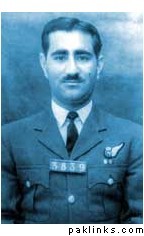
Flight Lieutenant Saifullah Khan Lodhi was a navigator of exceptional ability and a completely dedicated officer. He possessed unusual skill, enthusiasm and drive, which enabled him to make a valuable contribution towards operations. He undertook several operational missions most cheerfully and enthusiastically, invariably attaining outstanding results. It was on one such mission on 11 September 65, that he lost his life. For his extreme dedication to duty, Flight Lieutenant Saifullah Khan Lodhi was awarded Sitara-i-Juraat.
Flight Lieutenant Yunus Hussain
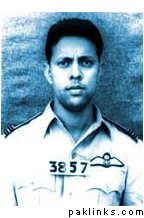
Flight Lieutenant Younus Hussain fought in air battles aggressively, fearlessly and with great professional skill. During one such engagement, he fought singly against six enemy aircraft and shot down two Hunters. Though his own aircraft was damaged in this encounter, he managed to bring it back to base safely. On 6 September, while attacking Halwara airfield, his small formation was intercepted by a large number of enemy and, although his aircraft was hit, he refused to break off the engagement, in complete disregard of personal safety, and was reported missing from this mission. He became a symbol of courage and professional ability for other pilots. For his , valour, professional skill and devotion to duty he was awarded* Sitara-i-Juraat. *
***Aircraftman Anwar Hussain ***
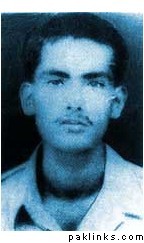
Leading Aircraftman Anwar Hussain was on duty at a vital point. His position was rocketed by enemy aircraft and the place caught fire. Anwar Hussain was the only person on duty over there. He fought the fire single-handedly with the available fire appliances and managed to control it and thus saved expensive equipment. His death is an example of courage and unfaltering devotion to duty towards the service as well as to the country. He was awarded Tumgha-i-Juraat.

