A little history/info
The origin of the art began as Chinese Paper Folding. The Japanese origin began in the 6th century when Buddhist monks from China carried paper to Japan. The first Japanese origami is dated from this period.
Origami had already become a significant aspect of Japanese ceremony by the Heian period of Japanese history. Samurai warriors would exchange gifts adorned with noshi, a sort of good luck token made of folded strips of paper. Origami butterflies were used during the celebration of Shinto weddings to represent the bride and groom.
In the 1960s the art of origami began to spread out, first with modular origami and then with various movements developing, including the kirikomi. Origami is now an international art.
Contrary to most popular belief, traditional Japanese origami, which has been practiced since the Edo era (1603–1867), has often been less strict about these conventions, sometimes cutting the paper during the creation of the design. (Source)
An ancient Japanese legend promises that anyone who folds a thousand origami cranes will be granted a wish by a crane, such as long life or recovery from illness or injury. The crane in Japan is one of the mystical or holy beasts (others include the dragon and tortoise), and is said to live for a thousand years.
A thousand paper cranes is also traditionally given as a wedding gift by the folder, who is wishing a thousand years of happiness and prosperity upon the couple. It can also be gifted to a new baby for long life and good luck. Hanging a Senbazuru in one’s home is thought to be a powerfully lucky and benevolent charm.
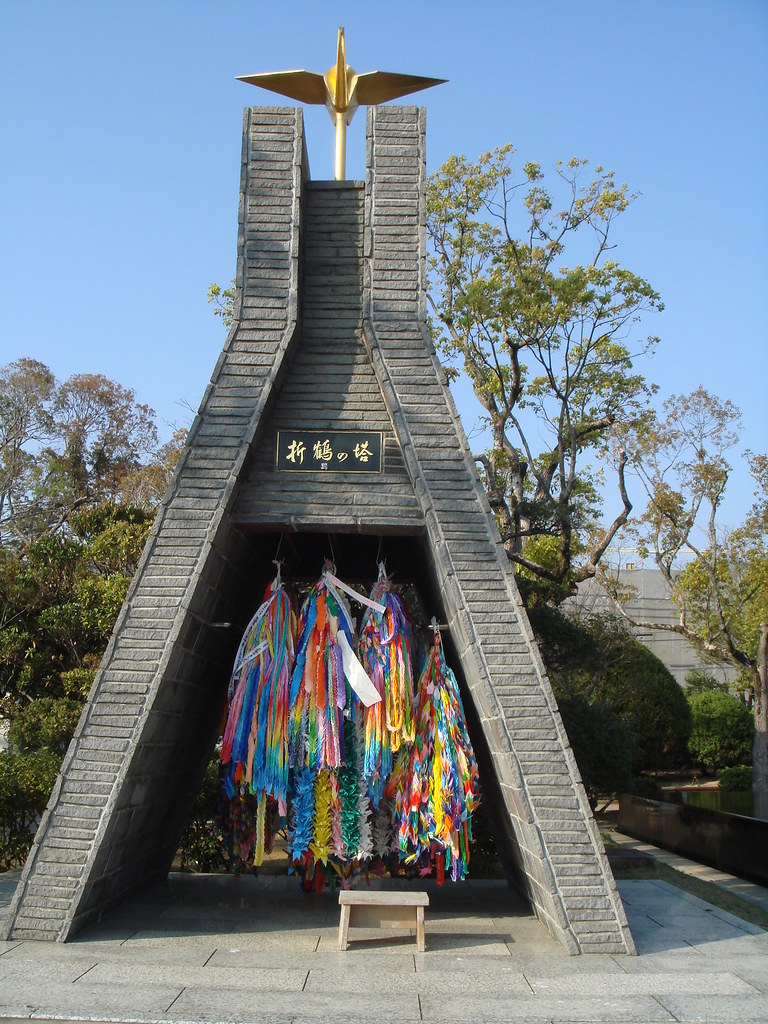
The Thousand Origami Cranes has become a symbol of world peace through the story of Sadako Sasaki, a Japanese girl who contracted leukemia as a result of radiation from the atomic bombing of Hiroshima during World War II. Her story is told in the the book Sadako and the Thousand Paper Cranes. Several temples, including some in Tokyo and Hiroshima, have eternal flames for World Peace. At these temples, school groups or individuals often donate Senbazuru to add to the prayer for peace. The cranes are left exposed to the elements, slowly dissolving and becoming tattered as the wish is released. (Source)
People also make miniature cranes, because it’s just so challenging (Really…making a crane is not easy. It’s intricate work).

Some also make stuff out of a dollar bill (just 1 bill). Just some examples


This is made by just 1 piece of paper

And some other things

Made by 500 pieces


ohh…the crazy things you can do with tree pulp :phati: