City of the Month Special Edition ~~Mohenjo-daro~~

**The first City of The Month for 2014 is a Special Edition!! This month I want to highlight the archaeological site of Mohenjo-daro.

****Mohenjo-daro , (Sindhi: موئن جو دڙو), (Urdu: موئن جودڑو‎), lit. *Mound of the Dead; is an archeological site in the province of Sindh, Pakistan. Built around 2600 BCE, it was one of the largest settlements of the ancient Indus Valley Civilization, and one of the world’s earliest major urbansettlements, contemporaneous with the civilizations of ancient Egypt, Mesopotamia, and Crete. Mohenjo-daro was abandoned in the 19th century BCE, and was not rediscovered until 1922. Significant excavation has since been conducted at the site of the city, which was designated a UNESCO World Heritage Site in 1980.

***Name

Mohenjo-daro, the modern name for the site, simply means Mound of the Dead in Sindhi. The city’s original name is unknown, but analysis of a Mohenjo-daro seal suggests a possible ancient Dravidian name, Kukkutarma (“the city -rma] of the cockerelkukkuta]”). Cock-fighting[size=2] may have had ritual and religious significance for the city, with domesticated chickens bred there for sacred purposes, rather than as a food source.

Location

Location of Mohenjo-daro in the Indus Valley and extent of Indus Valley Civilization(green).

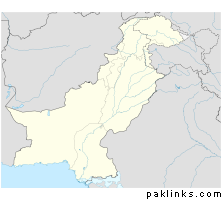
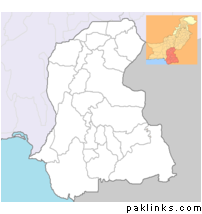
Mohenjo-daro is located in the Larkana District of Sindh, Pakistan, on a Pleistocene ridge in the middle of the flood plain of the Indus River Valley, around 28 kilometres (17 mi) from the town of Larkana. The ridge was prominent during the time of the Indus Valley Civilization, allowing the city to stand above the surrounding plain, but the flooding of the river has since buried most of the ridge in deposited silt. The site occupies a central position between the Indus River and the Ghaggar-Hakra River. The Indus still flows to the east of the site, but the riverbed of the Ghaggar-Hakra on the western side is now dry.[/size]

Re: City of the Month Special Edition Mohenjo-daro

Re: City of the Month Special Edition Mohenjo-daro

Historical context

Mohenjo-daro was built in the 26th century BCE. It was one of the largest cities of the ancient Indus Valley Civilization, also known as the Harappan Civilization, which developed around 3000 BCE from the prehistoric Indus culture. At its height, the Indus Civilization spanned much of what is now Pakistan and North India, extending westwards to the Iranian border, south toGujarat in India and northwards to an outpost in Bactria, with major urban centers at Harappa, Mohenjo-daro, Lothal,Kalibangan, Dholavira and Rakhigarhi. Mohenjo-daro was the most advanced city of its time, with remarkably sophisticated civil engineering and urban planning. When the Indus civilization went into sudden decline around 1900 BCE, Mohenjo-daro was abandoned.
**
Rediscovery and excavation**

The ruins of the city remained undocumented for over 3,700 years, until their discovery in 1922 by Rakhaldas Bandyopadhyay, an officer of the Archaeological Survey of India. He was led to the mound by a Buddhist monk, who reportedly believed it to be a stupa. In the 1930s, major excavations were conducted at the site under the leadership of John Marshall, D. K. Dik****ar and Ernest Mackay.

Further excavations were carried out in 1945 by Ahmad Hasan Dani and Mortimer Wheeler.
The last major series of excavations were conducted in 1964 and 1965 by Dr. George F. Dales. After this date, excavations were banned due to weathering damage to the exposed structures, and the only projects allowed at the site since have been salvage excavations, surface surveys, and conservation projects. However, in the 1980s, German and Italian survey groups led by Dr. Michael Jansen and Dr. Maurizio Tosi used less invasive archeological techniques, such as architectural documentation, surface surveys, and localized probing, to gather further information about Mohenjo-daro.

Architecture and urban infrastructure

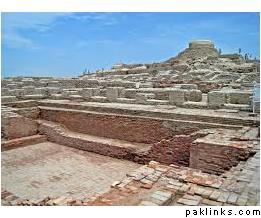
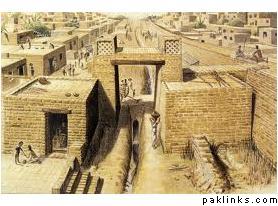
Mohenjo-daro has a planned layout based on a street grid of rectilinear buildings. Most were built of fired and mortared brick; some incorporated sun-dried mud-brick and wooden superstructures. Estimates of the area covered by the city range from 85 to 200 hectares, with a “weak” estimate of peak population at around 40,000. The sheer size of the city, and its provision of public buildings and facilities, suggests a high level of social organization. The city is divided into two parts, the so-called Citadel and the Lower City. The Citadel – a mud-brick mound around 12 metres (39 ft) high – is known to have supported public baths, a large residential structure designed to house about 5,000 citizens, and two large assembly halls.

The city had a central marketplace, with a large central well. Individual households or groups of households obtained their water from smaller wells. Waste water was channeled to covered drains that lined the major streets. Some houses, presumably those of wealthier inhabitants, include rooms that appear to have been set aside for bathing, and one building had an underground furnace (known as ahypocaust), possibly for heated bathing. Most houses had inner courtyards, with doors that opened onto side-lanes. Some buildings had two stories.

In 1950, Sir Mortimer Wheeler identified one large building in Mohenjo-daro as a “Great Granary”. Certain wall-divisions in its massive wooden superstructure appeared to be grain storage-bays, complete with air-ducts to dry the grain. According to Wheeler, carts would have brought grain from the countryside and unloaded them directly into the bays. However, Jonathan Mark Kenoyer noted the complete lack of evidence for grain at the “granary”, which, he argued, might therefore be better termed a “Great Hall” of uncertain function.Close to the “Great Granary” is a large and elaborate public bath, sometimes called the Great Bath. From a colonnaded courtyard, steps lead down to the brick-built pool, which was waterproofed by a lining of bitumen. The pool measures 12 metres (39 ft) long, 7 metres (23 ft) wide and 2.4 metres (7.9 ft) deep. It may have been used for religious purification. Other large buildings include a “Pillared Hall”, thought to be an assembly hall of some kind, and the so-called “College Hall”, a complex of buildings comprising 78 rooms, thought to have been a priestly residence.

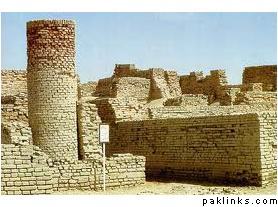
Mohenjo-daro had no circuit of city walls, but was otherwise well fortified, with guard towers to the west of the main settlement, and defensive fortifications to the south. Considering these fortifications and the structure of other major Indus valley cities like Harappa, it is postulated that Mohenjo-daro was an administrative center. Both Harappa and Mohenjo-daro share relatively the same architectural layout, and were generally not heavily fortified like other Indus Valley sites. It is obvious from the identical city layouts of all Indus sites that there was some kind of political or administrative centrality, but the extent and functioning of an administrative center remains unclear.
Mohenjo-daro was successively destroyed and rebuilt at least seven times. Each time, the new cities were built directly on top of the old ones. Flooding by the Indus is thought to have been the cause of destruction.
Re: City of the Month Special Edition Mohenjo-daro

Get in

Mohenjo-daro Airport (MJD) is adjacent to the archaeological site. Pakistan’s national carrier PIA operates both direct and non-direct flights from Karachi to Mohenjo-daro. Direct flights run four times a week and take one hour. The non-direct flight makes a stop at Sukkur Airport and only operates on Fridays. The outdated infrastructure of the airport prevents the use of large, advanced aircraft, with the PIA only using a regional airliner for flights. A one-way ticket can cost not more than PKR10,000. A shuttle bus can drop you at the site.

The nearest railway station is located in the nearby town of Dokri, which is some 7km away from Mohenjo-daro. There are two trains each day from Karachi that briefly stop at Dokri railway station: the Bolan Mail that is bound for Quetta and has air-con class, and theKhushal Khan Khattak Express bound for Peshawar. The train later makes a stop at Larkana railway station. Each takes around nine to twelve hours, depending on the traffic on the railway line. From Dokri, a shared rickshaw or a public van is available for Mohenjo-daro.
No direct buses run between Mohenjo-daro and any other major city and therefore you’ll have to go to Larkana first. Larkana is 30km from Mohenjo-daro and is on National Highway N-55, the Indus Highway. The 1,264 km long N-55 runs from Karachi to Peshawar and one can easily get both air-conditioned and non-airconditioned bus for Larkana from cities situated along the highway. From Larkana, a taxi to Mohenjo-daro, costs about Rs 1,000 (one way) and can take not more than an hour. Alternatively. you can also get a cheap shared motorcycle riskshaw or a public bus.

Re: City of the Month Special Edition Mohenjo-daro

Get around

Mohenjo-daro is quite a small town. The archaeological ruins site is inside a complex surrounded by a wall and only accessible through the main entrance gate. The complex is a walking site and it is small enough to be covered on foot easily. On the other hand, no other means of transport or even bicycles are allowed inside the complex. You might want to visit in the cooler winter months (October to March); otherwise you should be prepared for blisteringly hot weather. The highest temperature ever recorded in Pakistan, 53.5°C, was recorded here on 26 May 2010. It is the highest reliably measured temperature in Asia, and the fourth highest temperature recorded anywhere in the world.

See

The archaeological site is divided into two sectors: a high settlement to the west and a larger lower town to the east. These sectors are further subdivided into several areas. The names of the subdivided areas are actually abbreviations of those who excavated the ruins in the area. Everything is properly marked so it is quite easy to navigate and understand where you are and which structure is what.
The entrance fee for the complex is Rs 200 for foreigners, but only Rs 10 for locals, and Rs 5 for children. The museum is open between 08:30 and 19:00 from April to September, and between 09:00 and 17:00 from October to March.

  • Mohenjo-daro Archaeology Museum. The museum is open between 08:30 and 12:30 and between 14:30 and 17:30 from April to September, and between 09:00 and 16:00 from October to March. It was opened in 1967, and contains relics found at the ancient town. These are showcased on the first and ground floors, and illuminated in natural light. The museum showcases weapons, engraved seals, kitchen utensils, sculptures, terracotta toys, jewellery and other ornaments. Heavy stones, rings and platforms are kept at the ground floor, and the walls of the floor are filled with maps and pictorial illustrations. The entrance fee PKR200 for foreigners, Rs 10 for locals, and PKR5 for children.

Many of Mohenjo-daro’s best-known relics, such as the iconic sculpture of the priest-king and a bronze statuette of a dancing girl, are displayed at the National Museum in Karachi instead of at the site museum. Others left what is now the country before 1947 and are now in India’s National Museum in Delhi or the British Museum in London. Other museums in both Pakistan and India also have relics of the Indus Valley Civilisation; in particular the Lahore Museum has a good collection.

High western settlement

This settlement is generally referred to as the citadel mound, and it is mostly comprised of the ruins of ancient administrative buildings constructed on top of a massive mud-brick platform. Some of the major structures are:

  • The Buddhist Stupa. This is the the highest and most prominent structure, and is located atop the citadel mound. The mound is thought to have housed the elite of the early society and to have been a very sacred part of the ancient city. The stupa was built during the Kushan Empire, 1st to 4th centuries CE, while all of the other excavated ruins are from 2600-1900 BCE.

  • The Great Hall. This large building may have been a granary; it has what appear to have been a loading platform for carts transporting grain and a ventilation system to prevent spoilage. An alternate theory is that it was a public hall; the actual function of the building has not been determined.

The Great Bath is one of the best-known structures among the ruins

  • The Great Bath. A 2.4m deep, 12m long, and 7m wide pool known as the “Great Bath” is located at the centre of the Citadel, is made of fine baked waterproof mud bricks and a thick layer of bitumen (natural tar – presumably to keep water from seeping through the walls), which indicates that it was used for holding water. Many scholars have suggested that this huge deep bath could have been a place for ritual bathing or religious ceremonies. It is the earliest public water tank of the ancient world. Adjacent to it are a well that was used to supply water to the bath.

  • Assembly Hall (Pillared Hall). This structure may have been an assembly hall, a place for people to sit for meetings and social gatherings.

  • College of Priests. A large open space and courtyard referred to as a college lies to the east of the Great Bath. This large building having several rooms and three verandas, with two staircases leading to roof and upper floor, is thought to have been the residence of a very high official priest or college for priests.

  • First Street. This ancient city is also well known for its well planned roads and the houses along this wide road supposed to have been inhabited by the elite people.

  • Other structures are the remains of trenches, public wells, bathing platforms and old buildings, some of which may have been the residences of priests. Several drains branch off from the baths. There is also a temple complex nearby. Bastions and a tower built of baked brick are also located on this mound, as well as a mud-brick embankment between the stairs and the tower. Much of the rest of the mound is yet to be excavated.

  • Other ruins to see in this sector include monastic cells, Divinity street, a private bath, a dust bin, Main Street, the double ring well, a drain with a corbelled roof, a series of bathrooms, votive stupas, an oval-shaped well, a shell working shop, the well with the largest circumference, and more.

Lower east settlement

View of the Lower east settlement, showing an ordered urban layout.

This settlement in the east is made up of numerous lower mounds and was mainly a residential area for the ancient people. It is an extensive area, but very little of the lower site has been excavated. Excavation shows that the settlement was built to follow a grid system. The main streets are perpendicular to each other, being ten meters wide with bricked drains. The houses were entered from the main streets. A large part of the un-excavated mound located in the north is known as the wealthy residential area; this could have been the location of the mansions of the wealthy people. To the south is the poor residential area, which consists of much smaller structures when compared to the wealthy area. There are many private wells, bathing platforms and toilets in this area. There is also what is thought to be a large bazaar adjoining the wealthy residential area. One building in this section that has been excavated consists of circular depressions into the ground, leading many to believe that it was a dyer’s workshop and that the depressions were used to hold pottery vessels.
Other ruins to see in this sector include a deep excavated well, a rubbish water chute, a well preserved house, more wells, the chief’s house and its ovens, a room with a double stair case, a low lane, First Street, Central Street, the guard room, an assembly hall, a cesspit, Lane No. 1, and a market building.

Re: City of the Month Special Edition Mohenjo-daro

Buy

Among the most popular souvenirs are replicas of two famous pieces of sculpture found at Mohenjo-daro: the ‘Dancing Girl’, some 4,500 years old, which was found in 1926, and the ‘Priest-King’, which was found in 1927 and has become symbolic of the Indus Valley Civilization.

You’ll find locals selling various souvenirs outside the site complex. There’s also a gift shop adjacent to the site where you can buy souvenirs as well. Various seals, stones, and books written on Mohenjo-daro can also be purchased both from the gift store and local sellers.

Eat and drink

Water and tea are the main choices to combat the dry climate. There is only one proper restaurant in town, which is inside the PTDC motel. It provides some good food, available to non-resident guests too, and can cater to many people at once. Archaeology Resthouse can also provide you with food and drinks. There are also a few small general stores and stalls outside the complex that sell some food such as snacks, soft drinks, and bottled water.

Sleep

There are only two lodging facilities in town, both located close to the archaeological site. Alternatively, there are a few good options to stay in the nearby town of Larkana.

  • Archaeology Resthouse, Mohenjo-daro Rd, :telephone: +92 21 3452-1670, +92 21 3452-0638 (both in Karachi). This recently renovated decent accommodation is run by Pakistan’s archaeological department and available at affordable rates
  • PTDC Motel, Mohenjo-daro Rd, :telephone: +92 74 408-4009](tel:+9274408-4009). The motel is run by Pakistan’s tourism bureau, has nine rooms, some air-conditioned and some not, and a good restaurant. Overall, ideal for a stay overnight.

Re: City of the Month Special Edition Mohenjo-daro

good thread… :k:

Re: City of the Month Special Edition Mohenjo-daro

The interesting thing is the planning of Moen-Jo-Daro is much better than adjacent modern city of LaRkana (city of PMs) :bummer:

Re: City of the Month Special Edition Mohenjo-daro

sad :frowning: I dont know what to say on this, I hated Wattoo to the guts when he was the CM but even he worked a lot in his constituency (Okara). Same is the case with chaudharies…the problem with Sindh is that PPP knows that it does not have competition. It can do anything (read refrain) and get away from it.

Muq Bhai, have you ever been to Mohenjo- Daro?

Re: City of the Month Special Edition Mohenjo-daro

Awesome thread… :biggthumb: