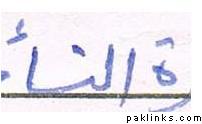
It's "un" because the laam is silent when there is a noon after it, rather it is mixed and Idghaam happens. The same rule applies if anyone of the following letters are preceeding a noon sakin: Yaa - Raa - Meem - Laam - Wauw - Noon.
And if the straight line over the "ha" is actually 2 dots then the ha is a ta marboota which makes it tun nisa.
It's "un" because the laam is silent when there is a noon after it, rather it is mixed and Idghaam happens. The same rule applies if anyone of the following letters are preceeding a noon sakin: Yaa - Raa - Meem - Laam - Wauw - Noon.
And if the straight line over the "ha" is actually 2 dots then the ha is a ta marboota which makes it tun nisa.
Thank you so much for your explanation Niksik. I would also like to know why "Nisa" is used at the end of some female names please?
I do not agree with McPende and Niksik’s explanation. TLK was right but his examples were not related to your question.
Correct transliteration would be ‘tun nisa’ like your second choice for example Syeda-tun-Nisa.
In this case as the previous word ends on ta-marbuta so you should connect that ta with noon of second word, please read more about ta-marbuta thanks.
One more thing I forgot to add is normally in Arabic we do not write seen like this it is Urdu style instead it should be written like this (سيدة النسا) with soshas in seen.
Can you explain what part of Niksiks explanation you did not agree with please. She also said (like yourself) that if the ha had two dots on top, it would read Tun Nisa.
I am very curious about finding out the exact translation because it seems like no one has a conclusive answer. Everyone I have asked have had different opinions, which are equally divided between Tun Nisa and Ul Nisa!
Is there a reason why Urdu readers do not all agree???
^ I am sorry I didn't read all of Niksik's post I only saw she started with "It's 'un'..." and I stopped at that point.
She is right. Again I apologize for it. :)
^ I am sorry I didn't read all of Niksik's post I only saw she started with "It's 'un'..." and I stopped at that point.
She is right. Again I apologize for it. :)
Anyways it will be tun nisa.
Thanks WG. I was just trying to see if there was more to the story when you didnt agree...no rudeness intended.
I have had a translation service contact several Urdu translators and it seems like everyone is divided on the answer. So far, more people are in favor of Tun Nisa but one has stated that the name should be written Un Nisa as the T is supposed to be at the end of the first part of the name, making it incorrect.
E.g. if you use the ta marboota, the ta would come on the end of the name ..e.g SaherT Unnisa would make no sense so it would be better to use it as Saher Un-Nisa.