Bahrain: Shouting in the dark - the full story
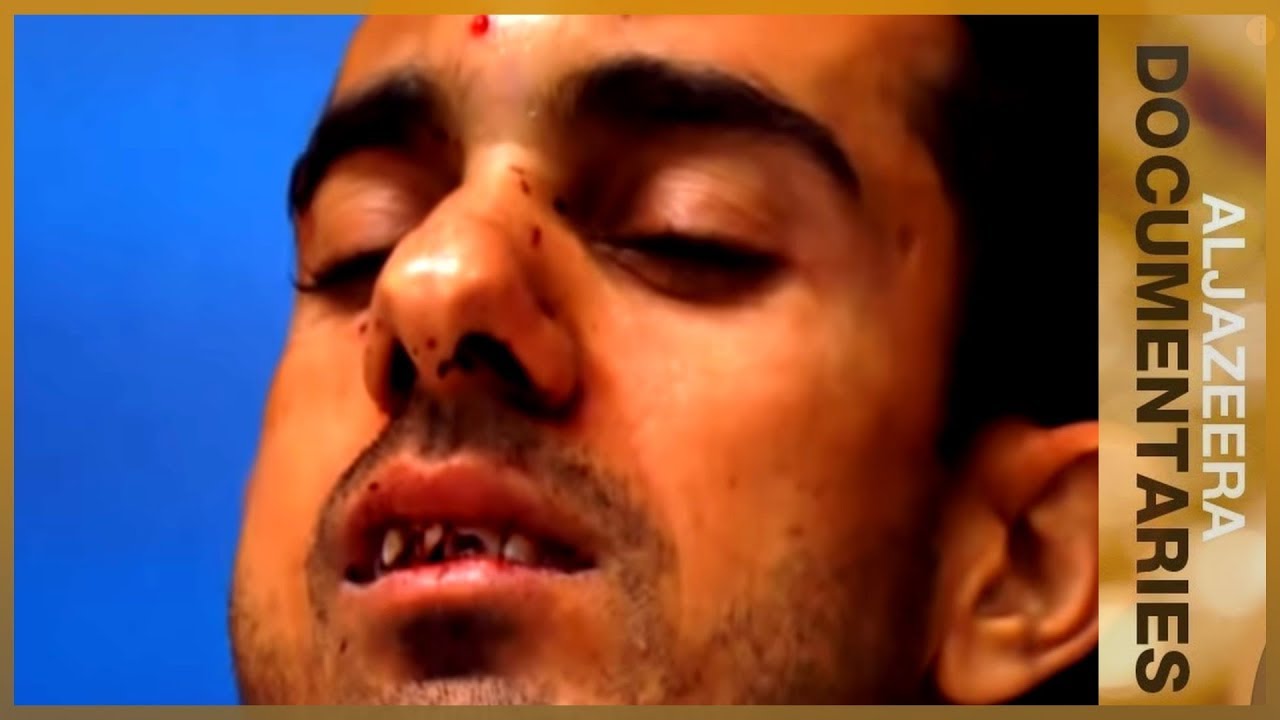
Bahrain: Shouting in the dark - the full story

=============================

Bahrain: An island kingdom in the Arabian Gulf where the Shia Muslim majority are ruled by a family from the Sunni minority. Where people fighting for democratic rights broke the barriers of fear, only to find themselves alone and crushed.

This is their story and Al Jazeera is their witness - the only TV journalists who remained to follow their journey of hope to the carnage that followed.

This is the Arab revolution that was abandoned by the Arabs, forsaken by the West and forgotten by the world.

=============================

In the 14th of last February people of Bahrain ,which is a tiny island in the Persian Gulf and a key U.S. alley, chose to go out to protest and march peacefully in Pearl (Lulu) Square in the capital Manama. People are demanding real reform and a constitutional monarchy as they voted for it 10 years ago the exact same day, and as promised by King Hamad Bin Isa Al Khalifa afterwards.
Bahrain’s ruling Khalifa dynasty are controlling every critical aspect in Bahrain .Prime minister and king’s uncle Khalifa Bin Salman Al Khalifa has been in office for 40 years, and according to an official government document that has been just released, bought the Financial Harbor land for 1 Bahraini Dinar ,i.e., 2.6 dollars.
The regime used its police forces and military to suppress the Bahraini people. These forces consists largely of foreign mercenaries from Pakistan, Balochistan, Yemen, Syria, and Jordan given the Bahraini nationality as the Sunni ruling family don’t trust the majority of its people which consists of 75% Shiite.

At least 7 people are killed and thousands are wounded using gas bombs, rubber bullets, fission bullets, and fire arms last month.

In the 16th of this month King Hamad Bin Isa Al Khalifa declared a state of emergency to stop protests and called foreign armies from the Gulf Cooperation Council (GCC) countries to prop up his regime. Now Bahrain is under invasion. Bahraini, Saudi, Emirati, Qatari, and Kuwaiti armies are taking control of Lulu square, suppressing protesters, kidnapping and killing people the all over the country.

We are facing total annihilation. People are killed in the streets by police, foreign thugs and armies, many are also missing . We cannot go outside our homes or we get shot by military helicopters, sounds of blasts are all over the country, police are using wounded people as traps to target more. We cannot go to Salmaniya Medical Complex which is the main hospital in Bahrain, it is seized by police and military and they are attacking wounded people, doctors, and paramedics. Many ambulances are stolen by foreign thugs packed by police, they take the wounded people to kill them. Now the army takes control of Salmaniya Medical Complex and appointed a colonel as a director and arrested many of the medical staff.

Police and armies are putting weapons inside ambulances and hospitals, they also crash cars attack schools, universities, and kill foreign workers and display these footages in the official TV as acts of the sectarian outlaw rioters. All of these brutal acts are documented by people shooting using their mobile phones, as foreign reporters are expelled from the country day after day to cover for this mass murders.

Saudi Army is taking control of Electricity Directorate and cutting it from certain areas to force us to kneel, while the regime is blocking many websites to shut us up.

People of Bahrain are appealing to help stopping these massacres. Please, let our voice and this appeal reach your friends, the media, the United Nations, your government , human rights activists and agencies, Bahrain and Saudi embassies in your country so that the blood shed might stop.

Re: Bahrain: Shouting in the dark - the full story

So As per Bahraini people, Balochistan is already a country??? says alot about the OP and the author of the thread

Re: Bahrain: Shouting in the dark - the full story

really, really good documentary. shows the disgusting face of Bahraini/Saudi state in its complete incontrovertible brutality.

Re: Bahrain: Shouting in the dark - the full story

Read_ Criticism and controversy.

Attacks on and censorship of Al Jazeera

Algeria

On 27 January 1999, several Algerian cities lost power simultaneously, reportedly to keep residents from watching a program in which Algerian dissidents implicated the Algerian military in a series of massacres.

On 4 July 2004, the Algerian government froze the activities of Al Jazeera’s Algerian correspondent. The official reason given was that a reorganization of the work of foreign correspondents was in progress. The international pressure group Reporters Without Borders says, however, that the measure was really taken in reprisal for a broadcast the previous week of another Al-Itijah al-Mouakiss debate on the political situation in Algeria.

Palestinian Territories

On 15 July 2009, the Palestinian National Authority closed down Al Jazeera’s offices in the West Bank, apparently in response to claims made on the channel by Farouk Kaddoumi that PA President Mahmoud Abbas had been involved in the death of Yasser Arafat. In a statement announcing the decision, the Palestinian Information Ministry said the station’s coverage was “unbalanced” and accused it of incitement against the PLO and the PA.

On 19 July 2009, President Abbas rescinded the ban and allowed Al Jazeera to resume operations.

United States

On November 13, 2001, during the US invasion of Afghanistan, a U.S. missile strike destroyed Al Jazeera’s office in Kabul. There were no casualties.

According to Glenn Greenwald, Al Jazeera is “constantly demonized in the American media.” In the run-up to the 2003 invasion of Iraq, the U.S. Pentagon hired the Rendon Group to target and possibly punish Al Jazeera reporters who did not stay on message. When Al Jazeera went on to do reporting featuring very graphic footage from inside Iraq, US officials decried Al Jazeera as anti-American and as inciting violence because it reported on controversial events.

Examples of censorship in the U.S. came shortly after the start of the invasion. On Monday, 24 March 2003, two Al Jazeera reporters covering the New York Stock Exchange (NYSE) had their credentials revoked. The New York Stock Exchange banned Al Jazeera (as well as several other news organizations whose identities were not revealed) from its trading floor indefinitely. NYSE spokesman Ray Pellechia claimed “security reasons” and that the exchange had decided to give access only to networks that focus “on responsible business coverage”. He denied the revocation has anything to do with the network’s Iraq war coverage. However, Robert Zito, the exchange’s executive vice president for communications, indicated that Al Jazeera’s graphic footage broadcast on Sunday, 22 March 2003, led him to oust Al Jazeera. The move was quickly mirrored by NASDAQ stock market officials. The NYSE ban was rescinded a few months later.

In addition, Akamai Technologies, a U.S. company whose founder was killed in 9/11, canceled a contract to provide web services for Al-Jazeera’s English language website.

Death of Tareq Ayyoub

Main article: Tareq Ayyoub

On 8 April 2003, Al Jazeera’s office in Baghdad was hit by a U.S. missile, killing reporter Tareq Ayyoub and wounding another. Al Jazeera reports that it had mailed coordinates for their office to the U.S. State Department six weeks earlier and that these should have clearly identified their location. Dima Tareq Tahboub, the widow of Tareq Ayyoub, continues as of 2003 to denounce her husband’s death and has among other things written for The Guardian and participated in a documentary broadcast on Al Jazeera English.

On 30 January 2005, The New York Times reported that the Qatari government, under pressure from the Bush administration, was speeding up plans to sell the station. However, as of 2011, the station/network has not been sold and it is unclear whether there are still any plans to do so.

Al Jazeera bombing memo

Main article: Al Jazeera bombing memo
Also see O’Connor - Keogh official secrets trial.
On 22 November 2005, the UK tabloid The Daily Mirror published a story claiming that it had obtained a leaked memo from 10 Downing Street saying that former U.S. President George W. Bush had considered bombing Al Jazeera’s Doha headquarters in April 2004, when United States Marines were conducting a contentious assault on Fallujah.

In light of this allegation, Al Jazeera has questioned whether it has been targeted deliberately in the past — Al Jazeera’s Kabul office was bombed in 2001 and another missile hit its office in Baghdad during the invasion of Iraq, killing correspondent Tareq Ayyoub. Both of these attacks occurred subsequent to Al Jazeera’s alleged disclosure of the locations of their offices to the United States.

Egypt

During the 2011 Egyptian protests, on 30 January, the Egyptian government ordered the TV channel to close its offices. A day after, on 31 January, Egyptian security forces arrested six Al Jazeera journalists for several hours and seized their camera equipment. There were also reports of disruption in Al Jazeera Mubasher’s Broadcast to Egypt.

Libya

Ali Hassan al-Jaber, a cameraman, was killed by pro-Gaddafi sleeper cells while covering the 2011 Libyan civil war in Benghazi.

Re: Bahrain: Shouting in the dark - the full story

Lets say what you wrote above is 100% true. Would you please clarify us why these these innocent Pakistani were attacked?


http://www.youtube.com/watch?v=_0peVj35DUc


http://www.youtube.com/watch?v=08LzV0jPoA0

Re: Bahrain: Shouting in the dark - the full story

Watch the documentary and you’ll see why innocent Pakistanies were attacked.

Re: Bahrain: Shouting in the dark - the full story

While the documentary was fairly accurate FOR THE MOST PART, the comment in the post about Balochistan being a country really left a bad taste in my mouth.

Re: Bahrain: Shouting in the dark - the full story

Its irrelevant. The post is clearly copy pasted in different forums, so unless the OP is the one posting it all over the internet its not really their doing. Its speculative to say that the list was intended to be a comment on whether Balochistan should be seen as an independent country, and even if someone held that view [as opposed to just posting text written by some anonymous source who put Balochistan along with a list of countries for some reason]... unless the topic was about Balochistan they are allowed to post about Bahrain without having to start talking about Balochistan's status.