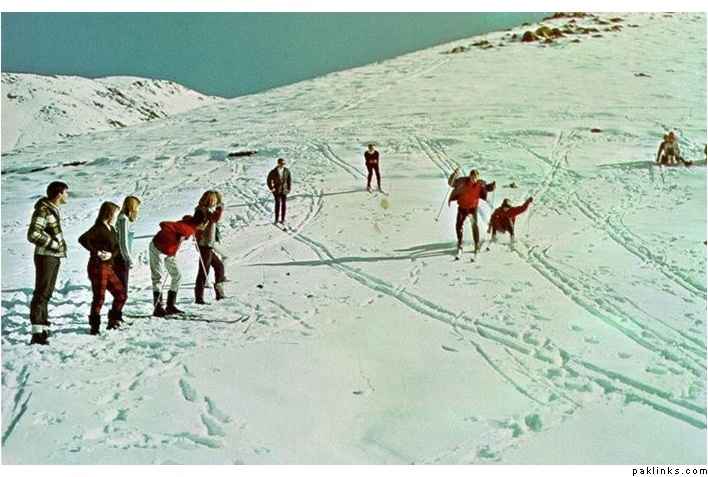
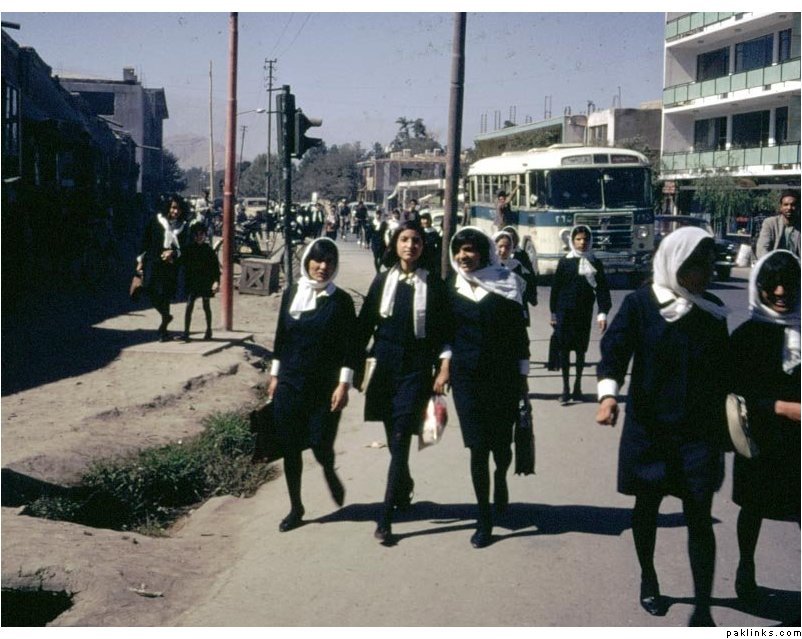
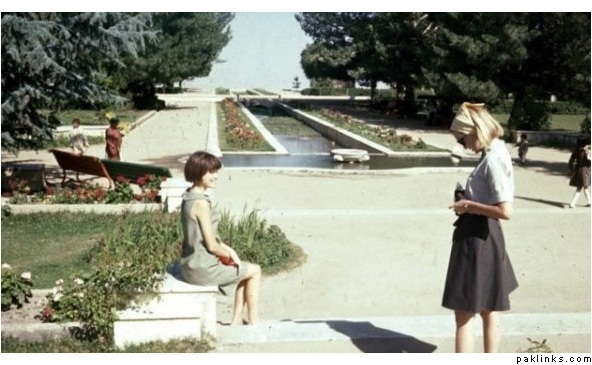
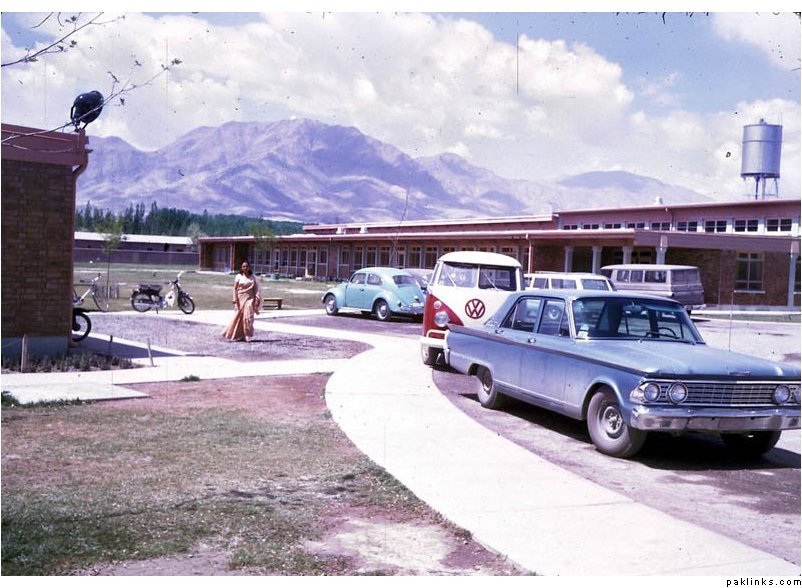
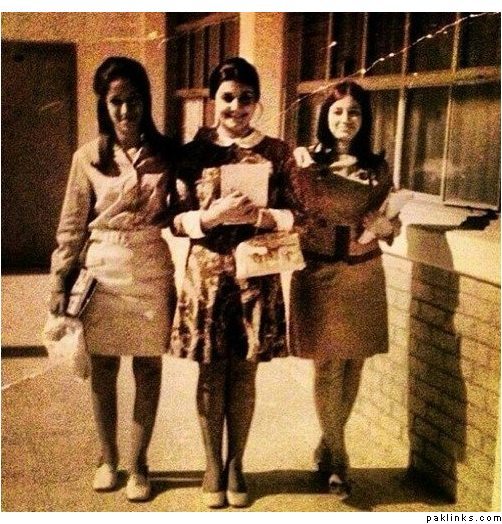
I wanted to post these photographs that show what Afghanistan was like prior to the war. Some of them are old photographs that I finally got around to scanning for my grandfather. Apparently, he scanned a few of them himself a few of years back for some American news publication or something of that sort but never got around to scanning all of them (it’s about two shoeboxes). Anyhow, here are a few that I found particularly interesting:
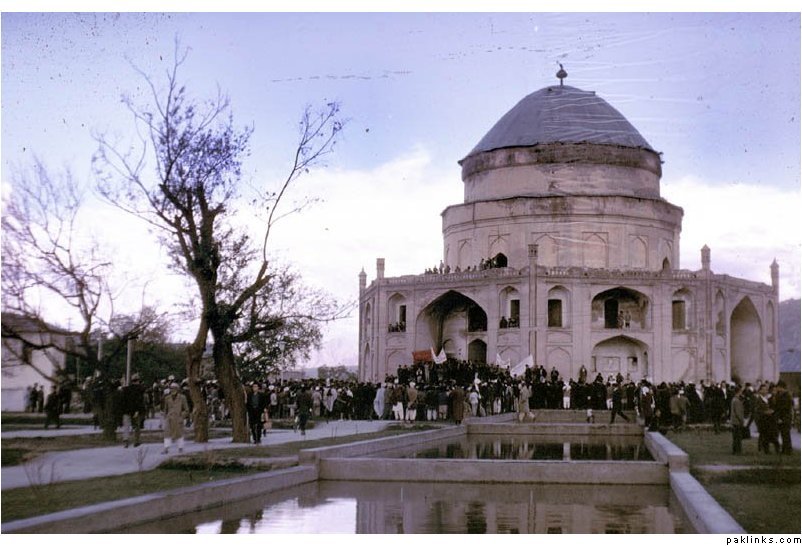
^My grandfather says that during that era they were quite the tourist attractions. The tomb of Babar still attracts some tourists but mainly from Iran and within the country and not to the extent it did back then. Interestingly, a massive restoration was just completed in 2008. It was begun in 2004 and used many of the same techniques used in the original construction of the structures.
Some of the palaces at Ghazni are still there but have fallen into great disrepair. Unfortunately though, not much has been done in the form of restoration as that area was still facing problems from the insurgency until relatively recently. It’s still possible to visit many of them but there are loads of checkpoints (as there are quite a few military bases in that region) and is rather troublesome.
I wanted to start a new thread about Mazars of Afghanistan, but as this is the same topic, I want to know the following:
There are cities like Mazar Sharif in Afghanistan and it seems that there was sizable Shia population in Afghanistan at certain point of time? What is the position of Mazar Sharif? Do pligrim are allowed to visit the sites?
many of Sufis of Punjab and Sindh came from Afghan areas, so there might be sufi mazars in Afghanistan. What are the famous mazars? I saw a picture of some afghani mazar, where ladies were shown in burqa (Blue shuttle cock burqas) and there were flocks of pigeons in front of a tomb, which was decorated with blue stone.
Historically, there has always been a sizeable Shia population in Afghanistan, mostly living in the western part of the country bordering Iran. Currently, around 20% of the population is Shia, the majority of which are Twelvers (although there is a smaller Ismaili population as well). The Twelvers are mainly Hazaras living in the western part of the country, concentrated in Herat and Farah provinces. The much smaller Ismaili population is mostly found in the northeast part of the country, primarily Baghlan province and along the border with Tajikistan. The Ismaili population around Baghlan currently faces much discrimination in Afghanistan as a result of siding with the Soviet forces during the war (and this was, from what I understand, the result of constant discrimination even before this time and lack of acceptance by the mainstream Ismaili community in Afghanistan over religious disputes).
As far as pilgrims, they are allowed to visit Mazar e Sharif and many still do. The majority of such visitors are from within the country but they are also many from Iran as well.
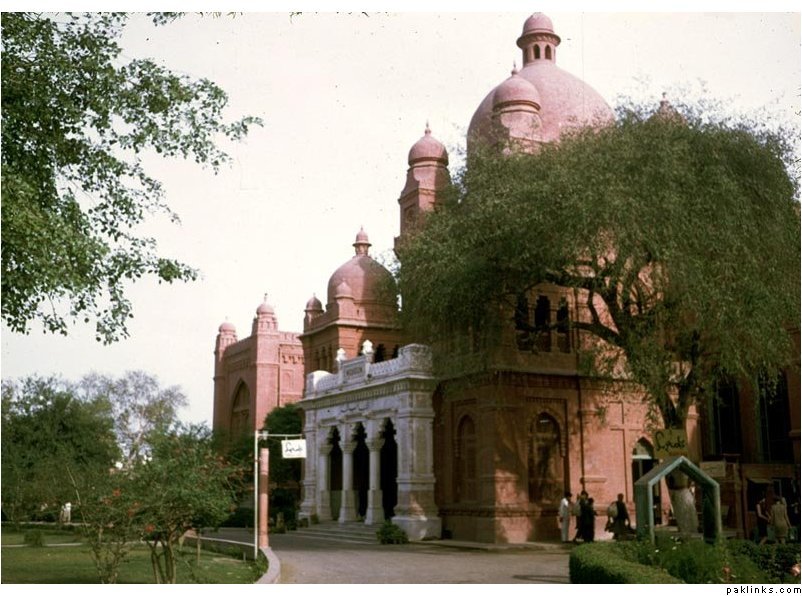
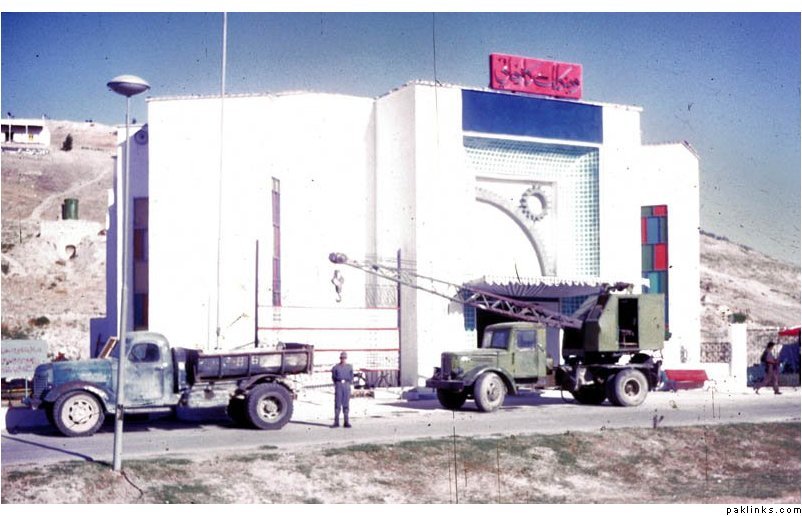
This building is not in Kabul, Afghanistan. It is the main entrance of Lahore Museum, situated at Mall Road, near famous Anarkali Bazaar and in front of old campus of The Punjab University.
The above picture seems to be mistakenly labelled as from Kabul. However, I would share my personal experience over here. In 2005, I came across an Afghani Website where pictures of following buildings of Lahore, Pakistan had been portrayed as buildings in Kabul, Afghanistan;
Lahore Museum Entrance (as above)
Chemical Pathology Department of The Punjab Univeristy
The Zamzama Cannon in front of Lahore Museum
Old Inter Continental Hotel (now Pearl Continental) Lahore.
When I notified those gross blunders to the website holders via e-mail, the whole lot of pictures along with others were removed. After a few days I received an e-mail of thanks by the website, in which it was claimed that those pictures were from the personal collection of father-in-law of the person running the website and he did not have the full knowledge of all the pictures.
There are still many blogs, websites and articles about Afghanistan and Afghanis, where historical facts are distorted, old pictures from other places are displayed as from Afghanistan and important personalities of Persian, Turkish, Uzbek, Tajik and Turkomen descent are vaingloriously personified as Afghanis.
Another example of distorting history by Afghanis. The actual mausoleum of Hazrat Ali (KAW) is in Najaf, Iraq. This mazar probably belongs to some saint having a name Hazrat Ali, but not Hazrat Ali Bin Abi Talib (KAW). In Afghanistan, it is a common to find names like Hazrat Ali, Hazrat Akbar, Hazrat Ibrahim etc. The Persian speaking Hazaras and other Shias of Afghanistan, gradually mistook this mausoleum of saint Hazrat Ali with Hazrat Ali Bin Abi Talib (KAW).
After you mentioned it, I enlarged picture and found ‘Ajaib Ghar’ written on front of the building and definitely its Lahore not Afghanistan.
There are many myths surrounding tomb of Hazrat Ali (RA) and even burial place of head of Hazrat Hussain. Considering such myths, we can expect different tombs across the region.
BTW, historically what could have been the exchange rate? Were Afghan currency stronger than Indian currency? They normally invaded our part of world and transferred Indian assets to Afghanistan from here to their country (Mughals being exception, but even we hear that Babar also built gardens in kabul after he defeated Lodhis).