A remarkable hero :salute:

Today is the aniversary of Shadath, the day one of my all time greatest hero’s of the subcontinent finally passed from this world.

And what a way to go… even in his last moments he was a king and like a true king he fought and ruled with the same dignity, courage and everlasting defiance he showed in death… in a way he even cheated death itself, for the man i speak of is none other than that legendary Tiger of Mysore the Sultan Tipu.

Regardless of what you may personally think of him… for he has been portrayed as everthing from a tyrant to a hero… you cannot deny that he was one of the most outstanding historical figures in the Indian subcontinent… so much so that even more than 2 centuries after his passing he is still seen as the archetype ruler and is one of the greatest kings ever to have ruled in the history of India.

Born as Sultan Fatheh Ali Tipu, to the house of the then ruler of the new kingdom of Mysore established by the Punjab adventurer Hyder Ali in 1750.

He was born in Devanhalli and lived a mere 50 years… however in that prolific rule he cemented his place in history and surpassed even the phenomenal achievments of his Father, who had first established the Mysorean kingdom after siezing it from the Wodeyars.

Having deposed the Wodeyars Hyder Ali chose not to kill the Hindu dynasty even though he had the power to do so… Historians have given two versions as to why this happened… depending on whom you choose to beleive. The Wodeyars were sparred in order not to antagonise the mainly Hindu population, or were sparred out of mercy by a man who had forcibly conquered deep into southern India a remerkable acheivment for a man who’s ancestors had been from the great desert dwelling persian dynasties.

In any case the Wodeyars would later re-claim thier rule… but until that time. Hyder Ali who was suceeded by his son Tipu Sultan were the de-facto rulers of Mysore. Having one of the richest kingdoms in thier hands and they set about establishing a strong southern kingdom which was headed by Muslims and driven by a mixed workforce of mostly Hindu subjects.

Tipu Sultan has often been accused of being a cruel ruler and to others he was the proto-independance fighter.

No matter how you view him he is still a fascinating personality and for this reason i have opened a thread to specifically share views on this great man.

Afterall none could be a better time for this afternoon back in May the 4th 1799 at the Northern inner watergate of his fortress Seringapatam, betrayed and beaten the tiger of Mysore stood alone at the mouth of a passageway surrounded by enemies and covered in blood… he fell and with him any hope of an India free from British rule.

So what are your views on this giant of Indian modern history…?

I would be interested to hear your views and see exactly how he is percieved by people for even after such a long time it’s evident that he was a most remarkable Indian hero.

Re: A remarkable hero :salute:

thanks for sharing.
sultan tipu is indeed a legend and legends never die.

Re: A remarkable hero :salute:

:salute: to the Legend

Re: A remarkable hero :salute:

Tipu Sultan, with his dignified personality and simple lifestyle was more than just an ordinary leader. He was greatly respected by his people and earned the trust of various international allies such as the French, the Amir of Afghanistan and the Sultan of Turkey, to assist him in his fight against the British. Tipu Sultan was the founder-member of the ‘Jacobin Club’ that served allegiance to the French. A true patriot like his father, Tipu visualized the forthcoming danger of the expanding British’s East India Company. Tipu and his father Haidar Ali proved successful in defeating the British in the First Mysore War in 1766 and in the Second Mysore War of 1782, thus negotiating the Treaty of Mangalore with them. While the British became aware of Tipu’s growing strength, they made alliances with the neighboring Nizam of Hyderabad and the Marathas, leading to the Third Anglo-Mysore war in 1790. Despite signing the Treaty of Versailles, the French however deserted Tipu and the combined forces proved immense for Tipu, and he was defeated in this war at his capital of Seringapatam, thus forcing him to sign a treaty in 1792 that witnessed half of his kingdom being confiscated along with a huge war indemnity. After the British broke allegiance with the Nawab, eventually defeating him in 1795, they once again sought to attack Mysore, leading to the Fourth Anglo-Mysore war in 1798. Tipu, being an able military strategist was prepared this time with his longstanding and successful military tactic of rocket artillery in war and a better army to thwart his adversaries. Fighting with all his valor, Tipu Sultan eventually died defending his capital Srirangapattana on 4th May, 1799. Tipu Sultan is buried alongside his father and mother, in a mausoleum built by him in 1784, known as ‘Gumbaz’, in his capital city of Srinagapattana.

Thanx For Posting About TIPPU SULTAN Here Its Really Great To Read About Him… Its Really Great To Hear About My City And History Of My People… Even Today Many Here In South India Especially In Mysore,Mandya,Srirangapatna,Kolar And Bangalore Many Admire His Rule And Pay Homage Today Also Thier Is A Homage Ceremony In Bangalore…
Inshallah His Soul Might Rest In Peace…
With Regards
BoredMan

Re: A remarkable hero :salute:

^ your very lucky to live in the shadow of such a great person… also these places are very beautifull as thier along Indias famous west coast.

Funnily enough despite all the good things about the Sultan Tipu there are still those who hate him. Many Indians still see him as some sort of wicked person… while others claim he was a Hindu at heart.

It saddens me how some people can be so blighted… He was a Muslim and he fought not for an Independant India but for an Independant Mysore state in which there was a system like no other where Hindu and Muslim worked together.

Muslims too should learn from his example for he was a brilliant administrator and was kind to all his subjects… Some will see me as gloryfying a Muslim despot but i am only paying tribute to a legend who was beyond comparrison for his age.

It’s one thing for Muslims like me who live in Pakistan to look up to him but even Ghandhi and other prominent Hindus thought highly of him… and the British who were the real cruel ones in those days payed tribute to him as being the last real obstacle to thier Raj.

Some ignorant historians want to downplay his significance but they fail to understand that the British even to this day hark back to thier victory over Tipu Sultan, purely becuase even though later the British had to face much more formidable powers liket the Mahrathas and the Sikhs these nations were conquered in a matter of weeks and months. Tipu Sultan and his father both held the British off for decades…

I’m glad that there is still a majority of people not just in India but also in other countires who see this legend for what he really was. Even though there have been countless films and books and even a television series dedicated to this Hero we still dont know enough and whats worse people still fail to understand that those bygone days would have been a lesson for contemproray times… the extremists might think otherwise but let them produce a man like this… if they can.

Insha-Allah may the spirit and dignity of the Sultan be everlasting and may todays blinded leaders learn from a true hero and leader… who’s example is timeless.

Re: A remarkable hero :salute:

Well Not Many Hate TIPPU SULTAN Here In South India … Only Light Minds And Those Who Dunno The Facts And History of Mysore State Or Karnataka State They Shall Hate Him… Thier Is One More Achievement Of Tippu Sultan And Hyder Ali Who Has Made Even Today Bangalore As World Famous… Its Tippu Sultan And Hyder Ali Who Made Lalbagh, Which Is The Biggest Asset Of Garden City Or Bangalore…Here In Lalbagh,You Can Find Almost All Types Of Plants And Trees, Some Are Real Rear One Of This World Which All Planted By Hyder Ali And Tippu Sultan And Also Tippu Sultan And Hyder Ali Are The Main Reason Why Today We Call Bangalore As Garden City.

With Regards
BoredMan

Re: A remarkable hero :salute:

^ Yeah i remmember hearing about that.

Also in Seringapatam there is another delightfull little palace called the Daria dowlat.

Tipu Sultans actual inner palace which was a massive building has been long lost so it seems… The Indian authorities tell us they were destroyed by the British during the siege.

However the British deny this and claim that it was intact and that more recentley the Indians destroyed most of it to make way for the Seringapatam railroad… the station for which uses the original pillars of the inner Palace.

I reckon the truth lies somewhere in between. The Tipus Shahadat has also been a mystery as his body was found in the evening. The current marker post of his falling at the water gate is placed at the outer water gate of the north wall. However Both the British and Indian historicall sources claim he was actually shot in the inner watergate whilst bravely fighting to get back into the city.

The outer water gate seems the obvious escape route but the Inner gate (which has been demolished) was the actuall place… and that the Tipu had no intention of leaving but wanted to get back into the city perhaps to make his final stand in the streets or his Palace.

History forgets the terrible attrocities that the British commited… those acts of barbarism are starkly contrasted by the Tipu Sultans own attitudes… it is said by the British that the Sultan never spilt a drop of innocent blood… and yet they themselves stripped the population and the land bare.

Also much debated is the fact that on the day of the British assualt the Tipu was betrayed. Obvious finger pointing would be at the Hindu soldiers in the Sultans service and whilst this may seem likely… the sad and horrible truth is that senior relative of the Tipu himself betrayed him and they were Muslims… what a disgrace.

That said there is still a lot to lear and both sides of the border have many things to teach one another. I think this is most pleasing to see a personality on whom both Muslims and Hindus can take pride… with most personalities in the history of India, the Hindus and Muslims sling abuse at one another and the person in question but it’s nice to see a figure both sides can agree on.

May Allah help both sides learn and come together again.

Re: A remarkable hero :salute:

Well Its True Some of It Destroyed By British And Some was destroyed by Mysore Poor Fellows To Build A Dam KRS Near Srirangapatna Not Many Aware Of this Fact :slight_smile:

Re: A remarkable hero :salute:

i really salute :salute: this gr8 legend of our History and have read a lot about him bcoz my father has a very large libraray and have many books on history …
He was a real Hero & got Shaheed only bcoz of its own traitors :aj: … Allah save us from present Meer Jafar’s(ameen)
Present Meer Jafar`s Are Indo-Pak Politicians Who Doesnt Like Both Neighbours To Be In peace And Harmony :slight_smile:

Re: A remarkable hero :salute:

Summa Ameen Sannan. :k:

Millaitarily Tipu Sultans armies were far advanced than those of the British and who know’s Mysore was one of the great “what if” kingdoms in Indian History… If the British didn’t stop the Tipu Sultan using thier foul methods… he would have easily trounced Hyderabads armies… and was more than a match for the poorly led Mahratha armies of the day who although superior in numbers were often led by chronic cowards and weak rulers.

Among some of his lesser known achievements Historians are quick to deny that Asians invented things… but Tipu Sultan is caonsidered the father of modern Rocket science. Althought the weapons he deployed were hardly accurate they were astonishingly long ranged with ranges from anything like 2miles up to exaples that hit targets eleven miles away. Back then armies fort in dense formations and from behind thick walled fortresses.

Tipu Sultans rocket corps could smash holes through any wall of the day and the long ranged rockets could hardly miss the red-coated British who stood four ranks deep with lines stretching for miles.

As well as Rockets the Sultans armies were the first to make use of long barreled hunting rifles as a common infantry weapon… thus they had better range and accuracy than smoothbore muskets and in a firefight most times the Tipus armies walked over anyone they met.

In 1792 things went backwards and the Tipu was forced to hand over his sons as hostages… due to the overhwelming armies he faced becuase the Hyderabad and Mahratha armies joined the British… still the Tipu had defeated them in nearly every battle until he was wounded at Dindingurh… where he was hit by a British artillery shell.

Mr Boredman your right politicians have sold the people and are still slaves of the west. :bummer:

Inshallah I Shall Send You Book Of Tippu Sultan And Other Great Muslim Rulers Of India… Its Promise :slight_smile:

Re: A remarkable hero :salute:

Well Its True Mr.Faris Udeen Our Own People Are Our Own Enemies… We Elect Them To Give Us Good Future And Economy… But Just For Thier Selfishness And Diginity They Make Us ScapeGoats… See You Can Take Ajmal Kasab As Example, He Is Also A ScapeGoat In Between Light Mind Fellowman Of Proud Countries… Inshallah It Shall Come To An End Very Soon Inshallah :slight_smile:

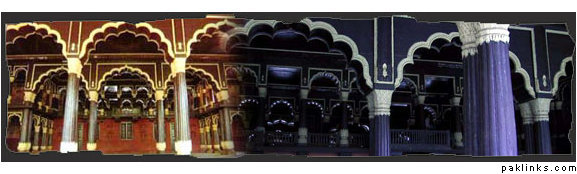
Within the original citadel, a mudbrick fort built by Kempe Gowda in 1537, lies Tipu Sultan’s Palace, dating from about 1790. Made mostly out of wood with finely embellished balconies, Pillars and arches this two-storeyed structure, a replica of the Daria Daulat Bagh in Srirangapattana served as a summer retreat of Tipu sultan. He endearingly called it Rashk-e-Jannat, or the “Envy of Heaven”. Although now dilapidated, it is still a hauntingly atmospheric place. While the palace retains the original elegant teak pillars, most of the painted decorations have been destroyed. The palace housed the public administrative offices from 1831, until they were shifted to the Attara Kacheri in 1868.

Re: A remarkable hero :salute:

Insha-Allah.

As for books and litreture we can gladly share such things but Insha-Allah if i get the chance i’ll come over there to see for myself they hold annual festivals to remmember Tipu Sultan who is considered a saint… and it’s easy to see why.

I thnkyou for the kindly provided information Mr Boredman.

In fact some say he was actually descended froma Qurayshi fammily and thus may have had sacred blood in him… but one doesn’t need to prove to me that Tipu Sultan is a person worth looking up to, the facts are there to see.

It is important for both nations not to forget that history of both sides is steeped in the other… Here in Pakistan there are many temples and shrines sacred to Hinduism and it’s my duty to protect them too… true they may belong to Infidels but if i destroy them without reason then that makes me ignorant and ignorance is a sin in islam almost as bad as being a kaffir.

I pray both nations come closer together and unite under leaders who truly represent the people… even if Tipu Sultan has been resting for more than two centuries he is as alive today as ever and i would rather happily follow the rules of a long passed king than to follow the words of some living politicion who’s every breath spits poison.

Re: A remarkable hero :salute:

Tipu was born at Devanahalli, in Kolar District, some 45 miles east of Bangalore, probably on 20th November 1750. He was the second son of Haidar Ali and his second wife, Fatima or Fakr-un-nissa. Her father, Muin-ud-din, was Governor of the Fort of Cuddapah, and her uncle died fighting for Haidar Ali at the Battle of Porto Novo in 1781.

There has long been some uncertainty about the exact date of Tipu’s birth: Beatson, quoting Allan, gives 1749; Kirmani gives 1750; and Wilks, writing between 1810-17, vigorously defends a date early in 1753: 'It is singular that there should be any doubt regarding his age, at the time of his death. By a genealogical tree, in my possession, prepared, as I conclude, from the records of the palace, by the English officer charged with the immediate care of the family, he was fifty and a quarter years by the Girra at the time of his death; of course lunar, as are all accounts so kept; this would make his age by the solar reckoning about forty-eight years and nine months, and the date of his birth about July 1750. Butcherow repeated to me the Canarese verse, recording his birth, in the year Angeera, 17th of the month Margeser, which would date his birth about January 1753, and his age at the time of his death, (as Butcherow, a confidential public officer, positively affirmed), forty-six years and four months, solar reckoning. the first of these accounts can scarcely be correct; Hyder married, or was betrothed to the mother of Tippoo in Coromandel, in 1750.

Tippoo was certainly born at Deonhully, and Hyder did not return thither till 1751. He was again in Coromandel in 1752, whence his wife was probably sent to Deonhuly on the occasion of her pregnancy, for he himself remained in Coromandel til 1755.’
Husain, who gives Friday, the 20th Zil-Hijja, 1163 AH (November 20th 1750) as Tipu’s birth date, also mentions that his mother had been living at Devanahalli ever since its capture by the Mysoreans in 1749 Although the event attracted little attention at the time, the birth of Tipu Sultan was destined to shape two centuries of history in India. Even today, that destiny has had little impact on Devanahalli.

The Chairman of the Tipu Sultan Research Institute and Museum, Mohammad Moienuddin, reflects on this in the epilogue of his recent book. Sunset at Srirangapatam: ‘35km away from Bangalore, in a sleepy street of Devanahalli, amidst rundown surroundings and a murky body of water, filled with lush green hyacinth behind, stands a small enclosed structure, with a sign announcing that this was where Tipu was born.’

‘His stature was about five feet eight inches; he had a short neck, square shoulders, and was rather corpulent: his limbs were small, particularly his feet and hands; he had large full eyes, small arched eyebrows, and an aquiline nose; his complexion was brown, and the general expression of his countenance, not void of dignity.’ This is also the image familiar from many surviving Tipu portraits. Here, Tipu is dressed entirely in green, a Muslim holy colour, which he wore in later life. Kirmani also notes that his green turban (Shumlehdar) was twisted ‘after the fashion of the Arabs.’

**Ameen Faris Brother Inshallah If Not Today Our Prayers Shall Give Us Good Fruit Tommorrow Inshallah Ameen **
With Regards
BoredMan