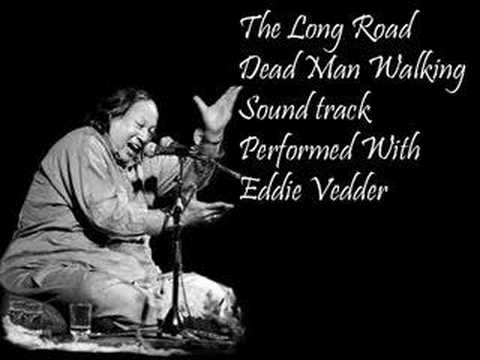
Right I want to discuss what you people know about this most interesting aspect of our cultural heritage?
Breifly Quwwali is an ancient and mystical form of devotional Music and as such it is almost exclusively of religous nature… the story of Quwwali is a central part of the Islamic world and part of the rich culture of the Sub-Continent.
Now I opened this thread in this section of the History forum becuase my assumption is that majority of Quwwali fans will be fammiliar with the Desi styles made popular by charismatic figures such as Nusrat Fateh Ali Khan who was perhaps the most profound influence on modern Quwwali and a controversial figure in the world of devotional Music.
However let us not assume that this ancient piece of our Islamic heritage is merely confined to the Sub-Continent as the various styles and evolutionary forms of Quwwali are found all across the Islamic world and the Musical genre of Quwwali is as much a part of non-desi heritage as it is in Indo-Pak region.
The basic fundamentals of Quwwali are that it is devotional Music and lyrics and as such has religous implications. However there is a halaal and haraam forms that we need to be aware of and so that perhaps belongs to the Religion forums.
For now I merely wish to present to you in the coming posts the long and lively history of Quwwali in the Sub-Continent… how it came to be, how it evolved and perhaps share with you some basic knowledge on the styles and schools of thought… it is a very deep and complex subject so please be patient with me and I will do my best to help give you a better understanding of the world of Quwwali so please do join me…
Insha Allah I will even share with you some of the common and some of the not so common gems of this musical wonder.
One of the most intriuging aspects of Quwwali is it’s long and established history has always been a question of debate.
Heres my basic knowledge and understanding of the matter.
Mehfil e Sammaa is the Islamic term for a concert of devotional Music often held at social gatherings. It was originally an Arab concept, and many famous examples of such devotional hymns exist. In Arabia the traditional Daff was incorporated to make among the first religous hyms in Islam two of these are known to have taken place in the very blessed presence of Rasool Allah Salalaho Alayhi Wassalam… the first occasion being on the entrance to Medina after Hijrat. The second occasion during the victory and capture of Makkah.
However Quwwali as we know it probably first emerged several centuries later in India when Hazrat Data GanjBaaksh and Hazrat Nizamudeen Awliyah met and thier companion Hazrat Amir Khusro on request by his Shiekh tuned up his Sitar and the first known Quwwali was Man Kunto Maula.
In the Subcontinent the earliest styles of Quwwali were Sufi devotional hymns and as time progressed the various schools appeared and systems were layed out.
A Quwwali is often categorised by various different styles.
Those which are earliest Quwwali’s had a distinct “Leh” which roughly translates as rythm, they got this not by the instuments used becuase early Quwwali developed from Samaa and Naats hymns that dont use Music. So the lyricist had to use poetry to set the rythm and the “Leh” of each poetic style had it’s distinct mark… and performers required great skill as well as patience to learn it.
When Quwwali reached the Turkic peoples it was improved with the addition of a heavy bass, often created by drums and guttural Leh. The Leh was guttural due to the nature of local poetry and verse which was often sung from the back of the throat. However since audiences had increased in size a single voice was often hard to hear so the words were repeated as they were sung… being passed down the group. This was the first grouped style where a chorus was used instead of a single poet, the chorus was also something which was used by the peoples of the region allready as they used this manner in thier native campfire songs.
In India itself the natives had thier own distinct musical culture of Ragaas and many were incorporated to the Quwwali. Early Quwwals found great popularity in the common masses of the Sub-continent and often they experimented with twists on the native Raags to create a new stylistic blend.
All of this is merely the basic start… in my next post I will give examples of the Quwwali style as it progressed and for the first time I will use some videos as well to show how the different styles sound and are used.
Well I hate to say one Quwwali is better than another… the styles are all like children of the same fammily. Some will be different but all have the same root. :jhanda:
As a Shayk once said there are as many paths to Allah as there are souls on earth.
I present to you people the first of my favourite Quwwali artists… it is Habib Painter Quwwal probably the most famous Indian Quwwal.
He was the first man to record a Quwwali on gramaphone record during the Raj… in modern history his was the first commercial Quwwali and he started very young. He was rewarded the title Bulbul e Hind by Nehru.
Habib Painter was a classical Quwwali artist whose style was developed from the ancient Raagas.
I will let you see the following rare Video of Habib sahib presented by his friend the late Naushad Ali both men were great artisits. Quwwali trancends naturall boundaries… and even though Nusrat Sahab and others are more well known for thier work Habib Painter was a master in his own right.
Habib Painter was by no means the first Quwwal as I have already established however he was the first Quwwal to be recorded and to make it big so to speak.
The other and most famous Quwwal of Raag style is a title held by Nusrat Fateh Ali khan of Pakistan, but before he hit the global stage there were two other big names in the Subcontinent and they were the Sabri Brothers who also practiced the Classical Indian style and Master Munshi Riazudeen who was a Indian poet and Quwwal who was the foremost artist of the Persian styles.
Heres a clip of Munshi Riazudeen note he uses not only a completely different language and Leh but he also has a totally different style altogether when compared to the classical Indian styles… Munshi Riazudeen was in the footsetps of the rich Persian poets and Sufi’s.
That said he was unique in that not only was the Persian style his forte… but he was as good as Habib Painter and Nusrat in his Raag style as well such a mastery of two completely different styles meant he was a most skillfull man and a unique blend of two cultures…heres him singing a classical Indian style Raaga…
Now I have allready explained a brief History of the Quwwali culture in India and Pakistan but until recent times there was no way of recording the beautifull art even though almost everyone in the Subcontinent had at least heard this beautifull and devoted art form. Everyone from the grandest King to the lowliest of Peasants and even the British Imperialists were fascinated by Quwwali and no History of the art in recent times can avoid mentioning one of the arts most respected specialists.
Long before Nusrtat Sahib made Quwwali a global phenomena there was a fammily in India who had upheld the art in it’s most prestine manner for several centuries and they were the Sabri’s.
It is claimed that the Sabri fammily are direct decendants of the great Mughal court musician Tansen… I cannot verify or deny such claims but if true it gives a remarkable picture of the scale these men are worth on the global stage… in fact if you consider the puritanical methodology of this group then it’s no surprise that they were the masters of North Indian Quwwali and Punjabi folk music… at a technical level they were the most gifted it seems of the Quwwals in recent history… due to the level of thier skill and the purity of thier original style.
When they first recorded thier Quwwali’s the Leh was indeed very classical, audiences were literally captured in a time warp… the voices could have literally come from the ancient past itself…
Originally the group of Brothers were four strong with several cousins and other fammily and friends joining thier team sometimes… now they are merely two with the surviving Maqbool Sabri and his Cousin Mahmood Ghaznavi Sabri. In recent times the Sabri’s have followed Nusrats style and updated thier musical style by incorporating elements of modern pop culture and even what we could call rock music… this has somewhat spoiled the magic of thier earlier works but still they are very good and have managed to pull it off though not as well as Nusrat Sahib in the 1990’s… In terms of skill though nobody can doubt thier mastery of the art.
The Sabri’s Leh is very distinct as they make use of North Indian Raags as thier main source of inspiration and this tally’s with the fact that they are decendants supposedly of Indians most celebrated Historical Musical genius. However they have adopted the Punjabi folk style as well as incorporated Arabic duff techniques to thier Quwwali. The Sabri’s are not as good as Munshi Riazudeen when it comes to Persian and thier work lacks the typical Persian Leh as the rythm and flow of music is very different. However they do seem to make a good use of the Bass especially in the drumming which is not far off the Steppe’s Leh used by thier chief competitor Aziz Mian.
Contrary to popular belief they never had a grudge with Aziz Mian despite sever clashes of Quwwali, in wich at times it appears they are using poetry to make fun of each other even slinging insults. The truth is that in fact both Artist agreed to these mutual Poetic duels, to raise awarness of key issues and sometimes the mockery had a deep meaning. In real life they were all very good friends and in fact made huge profit over these duels, which the public for a long time between the 70’s and 80’s were utterly hooked on.
Among the famous matches the Sabri’s poked fun at Aziz Mians Quwwali “Main Sharabee”( I am intoxicated) by producing “Peena weena chor Sharabee” (Stop drinking Alchohol you Alcholic) and which Aziz Mian hit back with “Haye Kambaakt thu ne Pee Naheen” (Alas you fool you did not drink) This seemingly nasty exchange was infact part of a classic poetic debate which is regarded as a modern icon among students of the complex Islamic schoold of thought and Sufi schools of Philosophy. The true message of the poetry not being about Alchohol about offering people an alternative to fullfill thier spiritual need . The other Famous exchange was an anti Capitalist pot shot… with the Sabri’s openeing salvo of “Yeh paisa Bolta hain…” (This money talks) and Aziz Mian hitting back with “Yeh Paisa kya karega!”(What will this money do!) which is another master class duel telling the Audience a deep message of how to reject a material world and take a more spiritual stance.
In the world of Quwwali few can match the ardour of the Sabri’s who were originally from Kalyana in India but moved to Karachi in Pakistan after partition.
Heres one of thier early works from the 1960’s showing the whole original team in action at a gathering in Ajmer, India.
Thier most famous Quwwali and most memorable for me was this one which they sang specifically for a 70’s Pakistani film and which was at the time an inovative move which only a few others had done… in fact Nusrat took this up much later…
And heres an example of one of thier more recent peices… note the brothers are now limited to just two main members who are in fact cousins.
When someone mentions the word Quwwali the one name that almost instantly comes to mind is the late musical genius Nusrat Fateh Ali Khan with his multiple octave voice and brilliant blend of Musical style he was without doubt the greatest in terms of popularity. I dont like saying any one Quwwal is better than another becuase this is wrong, sure give prasie where it’s due but nobody is truly better than anyone else…
Sure some styles are very different and each style has it’s own specialists but Nusrat Sahib is one of the best becuase he combined several styles such as Purbaree and Duff as well as Raaga’s to create a very beautifull artistic style. He was also the most well known Musicain to take his Quwwali outside it’s ancestral regions and onto the world stage collaborating with many other artists from all walks of life. To some this is a taint to the traditional style of Quwwali and has ruined the essence of what is a religous musical theme of devotion and made it into a disco revolution to which people dance across the world… however while in some respects I might agree even I cannot deny that were it not for Nusrat sahab making his expansion to the outside world few of you would even know what a Quwwali is so while he may have tainted the spiritual essence of Quwwali he also did more than anyone else to spread it to those who have no knowledge of it.
You can read up on Nusrat sahib from various sources across the web and I will help assist you if you want, but I cannot even begin to write about this great man for even I doubt my words can do him justice… My purpose was merely to introduce you all to a Musical wonder of the World… and if anyone wants to listen to his Quwwalis your free to post them here…
I would like to share the following works of this great artists with you all…
The first is a brief History of Nusrat sahabs style in his own words and as well as that you get to hear on of his best classical peices of Sufi music. Enjoy.
Heres a rare old video of Nusrat sahab the poetry is very classical and inspiring but his voice improvisation is amazing and nobody could match it in the World.
The next video is an older version of Nusrat sahab in action singing a devotiontal piece from one of his early days and this is a well known Sufi Poem in prasie of Lal Shabaz Qalandar.Even though this poem spans centuries of Islamic and Sub-Continent folklore it is still awesome to hear today and I challenge anyone to prodoce a better tune just listen to the Bass…:dhimpak: Not bad for song thats at least seven hundred years old.
Some more examples of Nusrat Fateh Ali khans later works in collaboration with other artists…
Naturally some more stern and classical fans will object to this sort of twist on Quwwali but you cannot argue that it’s certainly got some appeal though for some like me the change is a bit hard to take at first…
I will next discuss another famous Indian Quwwal because Paksitan has no monopoly on this by a long shot, I hope you guys are enjoying this diverse and interesting exploration of the History of our Quwwali music. :dhimpak:
Aah thats great I am also a big fan of those two… in fact I once had the mighty privilidge of sitting right next to Aziz mian sahab and he was one of the kindest and most wise men you will ever imagine. I will be posting about him very soon but first I will make a brief post on the Indian Qawaal Yusuf Azad.
Right as promised I forge on with the story of Quwwali in the Subcontinent and the next phase of Quwwali that took of in India during the 70’s was caused by a new style of Quwwali artist namely Yusuf Azad.
He was a recent Quwwal who sprang from North India and mainly sang Urdu Ghazals but used a Quwwali leh. His history is very patchy but worth mentioning becuase he took Quwwali to the masses in the most unusual manner and even collaborated with a Woman singer namely Rashida Khatun. The two were quite a hit around the World with a comical but very philosophical Quwwali style and it was superb.
It was also a very unique style which Bollywood Films picked up on and took further… the filmi Quwwali genre however is regarded as a trajesty of the True art form by many.
Personally I must admit I dont think it ranks as Quwwali itself (not in the true sense) however its very ammusing and shows the versatility of the art, sure there are issues since most believe a female Quwwal is also a big no no… but again the stances are changing.
While I still prefer the classic forms I admit these newer styles do have thier appeal and to be honest it’s still better than half the other nonsense I am forced to listen to sometimes… :hehe:
Heres some of his early Works… Note at first Yusuf Azad has a style very rigid that you would see simmilar to Habib Painter jee.
Heres his later work in collaboration with Rashida Khatun… it makes quite an interesting poetry and very commical Quwwali.
Note the gradual change in style over the years. Hope you are enjoying this exploration.
My next post will include a brief skip through some of the best Filmi Quwwali’s before coming to one of my all time favourites Comrade Aziz Mian. :jhanda: