Seminars in LUMS

Re: Seminars in LUMS

Seminar

Making 3D Models from a Video: The Structure From Motion Problem

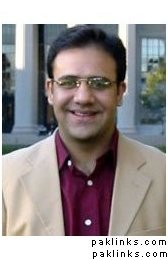
Speaker : Dr. Sohaib Khan
Date : March 18 , 2009
Venue : 4th Floor,SSE LUMS.
Time : 3:00 pm
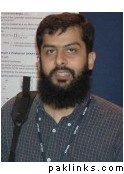

Shoaib Khan
Assistant Professor, LUMS
PhD, University of Central Florida, 2002
Computer Vision

**Research Interests **

Dr Khan’s research interests broadly span the areas of image and video analysis, including image registration, multiple camera surveillance systems, 3D reconstruction from video and non-rigid structure from motion. In image registration, he has made significant contributions to the problem of geo-registration of a video sequence with a large reference image. The recent emphasis in this work has been on developing very fast methods for peak search in normalized cross correlation surfaces. Dr Khan also has well-cited publications in the areas of multiple-camera tracking and segmentation of video into layers.

Biography

Dr Khan earned his PhD degree in Computer Science in 2002 from University of Central Florida, Orlando, specializing in computer vision. He received BE degree in Electronics Engineering from GIK Institute of Engineering Sciences and Technology, Pakistan, in 1997, where he was nominated for the AQ Khan Gold Medal Award. He was the recipient of two graduate merit fellowships from University of Central Florida and the Hillman Award for excellence in PhD research. Currently, he is holding the position of Assistant Professor at Lahore University of Management Sciences, Pakistan. He is an Associate Editor of Machine Vision and Applications journal, and served on the committees of IEEE Workshop on Motion and Video Computing (2002 and 2007), British Machine Vision Conference (2007) and Workshop on Frontiers of Information Technology (2005-2008). He has served as an image-processing consultant for public and private sector organizations in Pakistan, and his lab at LUMS has received significant funding for research on computer vision problems.

LUMS Homepage:

LUMS > Department of Computer Science > Faculty > Sohaib Ahmad Khan

Computer Vision Lab

Computer Vision Lab, LUMS School of Science and Engineering

Projects

Projects | Computer Vision Lab, LUMS School of Science and Engineering
Re: Seminars in LUMS

Welcome to Experimental Physics 1

Re: Seminars in LUMS

Seminar

**
How the “What” becomes the “How”**

Speaker : Dr. Umar Saif
**Date **: April 23 , 2009
Venue : 4th Floor,SSE LUMS.
**Time **: 3:00 pm


Umar Saif
Associate Professor, SSE LUMS
PhD, University of Cambridge
Post Doctorate , MIT

Achievements

Dr. Umar Saif received his academic training from LUMS, Cambridge and MIT. He did his BSc (Hons) from LUMS (1998), PhD from University of Cambridge (2001) and Postdoctorate from MIT (2002), all in Computer Science. Dr. Saif worked and taught at the MIT Computer Science and Artificial Intelligence Laboratory (CSAIL) as a research scientist for four years, where he was part of the group (O2S) that developed system technologies for project Oxygen – a US$28 million project sponsored by the US Department of Defense (DARPA) and an industrial Alliance of world-class companies including Nokia, HP, Compaq, NTT DoCommo, Phillips, Acer and Delta.

While at MIT, Dr. Saif also managed the multi-million dollar collaboration on future computing technologies between University of Cambridge and MIT sponsored by the Cambridge-MIT Institute (CMI) and a consortium of hightech British companies.

Dr. Saif’s research interests broadly span areas of Ubiquitous Computing, Distributed Systems, Mobile Systems, Network Protocols and Architectures and ICT for developing world countries. Dr. Saif has authored several influential publications and is a Fellow of the Cambridge Commonwealth Trust. Dr. Saif’s research has been featured in popular media, including BBC, New Scientist, MIT Technology Review, Distributed Systems Online, and Dawn News. His research has received grants from Microsoft Research (MSR), Oxygen Consortium at MIT, Cambridge-MIT Institute (CMI), US State Department/USAID, HEC and PITB.

Dr. Saif was awarded the Mark Wesier Award at IEEE Percom’08, Digital Inclusion Award from Microsoft Research in 2006, Research Excellence award by LUMS for the year 2006 and 2008, and the IDG CIO Technology Pioneer Award in 2008. During his doctorate studies, Dr .Saif was a Trinity College Overseas Scholar and Commonwealth Scholar at University of Cambridge. He has been nominated for the MIT Technovator award and the TR100 award.

Dr. Saif has (co-)founded three technology startups: BumpIn.com (contextual chatting), SeeNreport.com (citizen journalism) and ChOpaal.pk (SMS social networking). Dr. Saif is the founder of one of the first startup incubators in Lahore, Pakistan, called SCI.

Research of Dr.Umar Saif

Umar Saif

Re: Seminars in LUMS

Abstract:

Computing systems are no longer the pampered, prized possession they were back in the 1970s. Computing devices no longer fill an entire (air-conditioned) room or cost millions of dollars. You no longer need a Ph.D. in computer science for using a computer. In fact, people regularly own and carry more than one computing device and often use computers imperceptibly as part of their daily life.

In this talk, I will argue that while computing devices have continued to become smaller, faster and cheaper, our fundamental paradigm for "programming" computers is still reminiscent of the 1970s. You must still learn an imperative language like Java/C++ or (God forbid) Matlab to program a computer and painfully specify each step in a recipe-like enlisting of the commands the computer must follow in a stipulated environment.

On the other hand, modern computing environments are highly dynamic and heterogeneous in nature. Applications in such an environment must be able to continuously adapt to changes in user locations and needs, respond to component failures and newly available resources, and maintain continuity of service despite changes in available resources. Such behavior necessitates a "goal-oriented" system which frequently re-evaluates available alternatives and may make heuristic compromises to best address the application needs with imperfect resources.

In this talk, I will describe our work on series of goal-oriented, self-adaptive systems developed as part of MIT's Project Oxygen. In such a system, a user initiates a program by only providing an under-specified "intent" (the "what"), while the system automatically generates and sustains an implementation (the "how") in a dynamically changing environment. I will conclude the talk with my recent thoughts on a radically new programming language designed for such self-adaptive systems. This work received the Mark Weiser Award in 2008 -- the most prestigious award in the field of pervasive computing.

Re: Seminars in LUMS

Lecture Talk

**3-D Electron Microscopy Stuies of the ‘MOUSETRAP’ mechanism of Proteinase Entrapment by Human a2-Macroglobulin
**

**Speaker **: Dr. Usman Qazi
**Date **: April 30 , 2009
Venue : 4th Floor,SSE LUMS.
Time : 3:00 pm


Usman Qazi
HEC Visiting Faculty
Ph.D. (Biophysics), University of Texas-Houston Health Science Center
M.S. (Radiation Physics), University of Texas
M.S. (Physics), University of Nevada, Las Vegas
Université de Franche Comté, France (Physics)

**
Biography**

Originally from Lahore, Usman Qazi studied at Université de Franche Comté, France, for a Maîtrise de Physique. He next went to University of Nevada, Las Vegas, in the US where he did an MS with a thesis in light scattering from polymer solutions. Pursuing an interest in biomedical imaging, he got an applied masters degree in radiation physics, with research in nuclear medicine imaging, at University of Texas-Houston Health Science Center. Choosing to go further in basic research, he received a PhD in biophysics from the molecular pathology program at the same institution, with a dissertation in three-dimensional electron microscopy in 1999.

After working as a postdoc in the same area at Lawrence Berkeley National Lab, he entered management consulting in 2002, executing strategy-related projects in health care and life sciences for clients in the pharmaceutical, biotech, medical device and diagnostics industries, ranging from academic start ups to senior management at large multinationals. He joined the SSE faculty team in August, 2008.

As a student, Dr. Qazi authored several scientific publications related to his academic research, and subsequently published trade journal articles on topics relevant to life sciences strategy consulting.

Re: Seminars in LUMS

Desert, are these science guest lectures a recent addition to LUMS? I like what they're doing but I dont recall LUMS ever being so invested in the sciences.

Re: Seminars in LUMS

HSK/hsk/navid83 (Canada , London,Pakistan) bhai jaan

SSE LUMS is school of engineering and science .This project initiated in 2004 and they gathered one of the best potential inside and outside Pakistan.Kindly follow these links.

LUMS SSE | About SSE

LUMS SSE | Faculty Research

LUMS SSE | Giving to LUMS SSE

internships offered for CS students at AILAB IBA … students from LUMS living in karachi if interested can apply

AI LAB - Home

Re: Seminars in LUMS

Lecture Talk

Flat Panel Displays: Role of Backlight and Optical Films in LCD Displays

Flat Panel Displays have become an integral part of our lives. These are everywhere from wristwatches to the TV screens at our home to the mobile phones in our packets and to the billboards on our streets to name a few. In this lecture we would look at the different technologies that make these displays possible with special emphasis on LED backlight based LCD displays. How do these display technologies compare and contrast? And more importantly, what are their environmental impacts. We would also be looking at the role different light management films (BEF, diffusers, reflectors, etc.) play in these displays. Finally we will have a look at the new and upcoming technologies, which are going to shape our future viewing.

Speaker:

Dr Habib ur Rehman
Head of Optical Materials R & D
Exxelis Limited, U.K

October 1st, 2009, Thursday
Time: 16:00-17:00
SSE Auditorium 10-301

**
Personal profile:**

Dr Habib ur Rehman is a leading optical materials scientist and is currently the head of Optical Materials R & D at Exxelis Limited, U.K. He has developed a number of new materials for optical displays and optimised innovative processes for making LED backlight and light management films. He previously worked for Terahertz Photonics and was responsible for the development of polymer technology and groundbreaking sol-gel based silica on silicon deposition technology. He holds an M.Phil. degree in physical/polymer chemistry from QAU, Islamabad and a Dr. Ing. Degree from the Institute for New Materials, Saarbrucken, Germany.

Re: Seminars in LUMS

When is the next seminar going to happen

Re: Seminars in LUMS

date is not decided , when it will , i would post here
regards

Re: Seminars in LUMS

Complex (dusty) Plasmas

Dusty plasmas are open systems of plasma (electrons, ions) and dust particles (typically micron size grains) where the sink of plasma particles, due to absorption on dust, is balanced by a plasma source. These are uniquely informative in low-temperature laboratory discharges as well in near earth environment, planetary rings and interstellar space where these are ubiquitously found. However such micron sized dust particles are an annoyance in the plasmas of fusion energy and semiconductor manufacturing. The grains can be charged negatively and positively by several mechanisms depending on the local plasma conditions and radiation sources. Furthermore, in the presence of an ensemble of charged dust grains, there are collective dust plasma interactions featuring novel phenomena e.g. waves, instabilities, coherent nonlinear structures etc.

Dusty plasma physics has appeared as one of the most rapidly growing fields of science, as demonstrated by the number of published papers in scientific journals and conference proceedings. In this talk, the basic physics of dusty plasmas as well as some collective processes will be discussed. The focus will be on the charging mechanisms, formation of dust atoms and molecules, nonlinear Landau damping of helicon waves and lower hybrid cusp soliton. It appears that collective processes in a complex dusty plasma would have excellent future perspectives in the twenty-first century, because they have not only potential applications in interplanetary space environments, or in understanding the physics of our universe, next generation ITER devices but also in advancing our scientific knowledge in multidisciplinary areas of science.

*Invited speaker: *

Zahida Ehsan
Research Officer, Salam Chair for Physics,
Government College University, Lahore

October 30,2009
Time: 16:00-17:30
Venue: SSE Auditorium 10-302