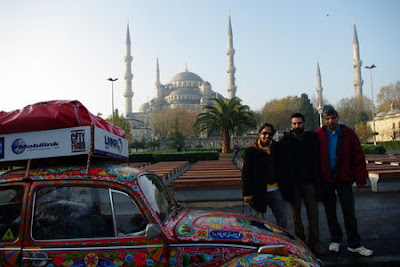
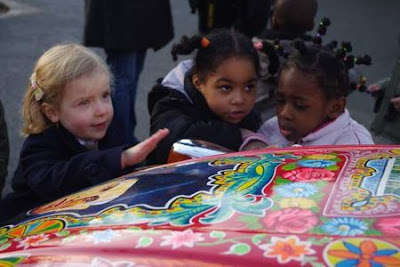
A Kia Sorento painted by Ghulam Sarwar. The Pakistan native has been in the U.S. for several months and has painted several cars in the colorful style of PakistA Kia Sorento painted by Ghulam Sarwar. The Pakistan native has been in the U.S. for several months and has painted several cars in the colorful style of Pakistani trucks and buses. (VOA Photo/Matt Hilburn)ani trucks and buses. (VOA Photo/Matt Hilburn)
Granta magazine Pakistan
The cover for Granta 112 was created by Islam Gull, a truck and bus artist of Bhutta village in Karachi, inPakistan. The style of painting is typically seen on Pakistan’s vehicles which has a long tradition. via
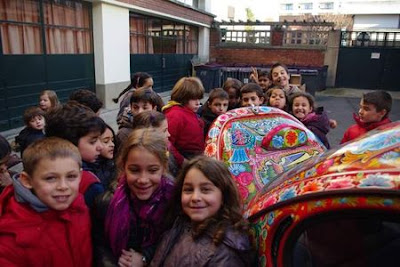
enthusiasm as seen at Behbud School at Saidpur village near Islamabad in Pakistan, children from the Fontaine School in Asnieres sur Seine near Paris met Foxy Shahzadi on December 11, 2009. The children (between 3 to 9) appreciated the car and were very keen on asking questions about where it came from, who made it and who Quaid-e-Azam and Allama Muhammad Iqbal are?. “Trop belle la voiture” (what a beautiful car") they said.
here is some history of this art, it started way back in 1920, and the reason was to attract passengers, they were called moving canvases.it is one of the biggest forms of representational art in country.it developed a deeper cultural significance over the time.
Unlike vanity plates modifications, Pakistani truck art is about cultural history and tradition, storytelling, passion, and sometimes playful one-upsmanship. As such, every little adornment on the trucks has a special significance. Jamal Elias breaks down the motifs for truck art into the following 5 categories:
Idealized elements of personal and communal life.
Elements of political and national life.
Talismans, trinkets, and clothing.
Talismans or religious symbols.
Obvious religious symbols and images.
Partly due different ethnic heritage, partly due to the unique stories each tribe has to offer, even within Pakistan, each province has its own distinct style of truck painting. While Sindh is famous for camel bone work, Balochistan and Peshawari fleet owners prefer wood trimmings, and Rawalpindi and Islamabadi trucks favor plastic work. The materials, the color, the arrangement, and the overall art style ultimately serves as a cultural representative of the region.